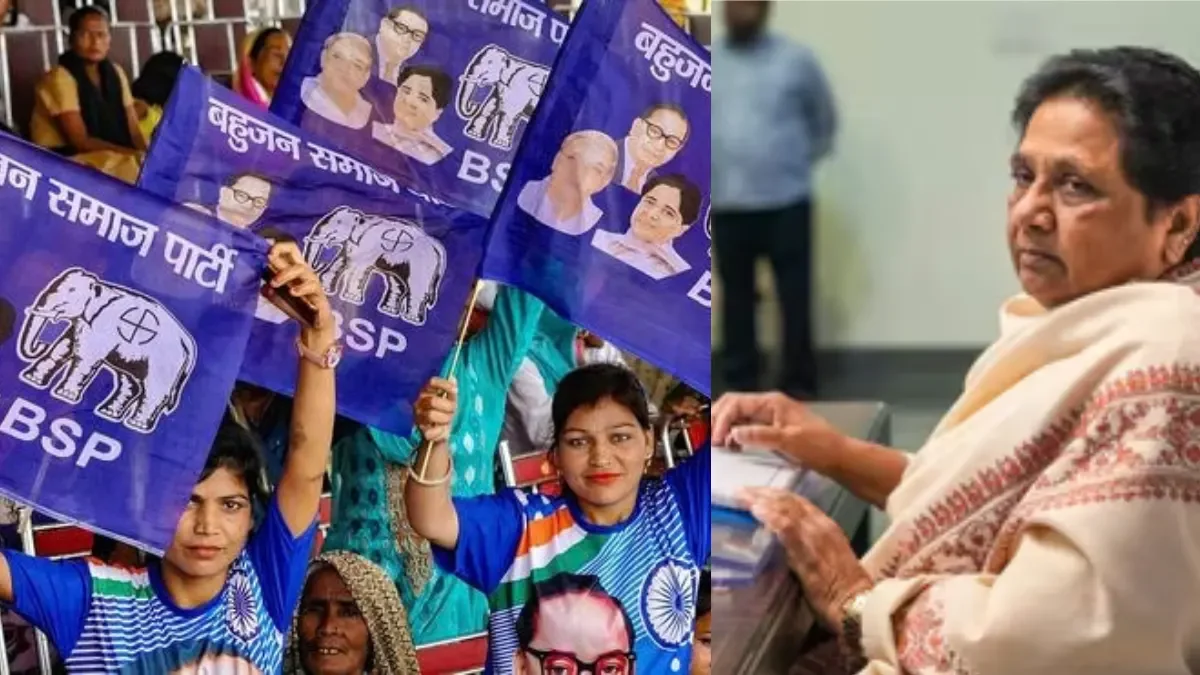
Uttar Pradesh’s political landscape is undergoing a major shift as Dalit voting patterns fragment. While the BSP works to protect its historical core, the BJP is successfully wooing non-Jatav sub-castes through targeted welfare integration and developmental outreach.
The Historical Dominance of Dalit Voters in Uttar Pradesh
The emergence of Dalit political consciousness in Uttar Pradesh transformed the democratic fabric of northern India. For decades, Scheduled Castes (SCs), who account for roughly one-fifth of the state’s population, acted as a cohesive political block. This unified assertion gave rise to regional empowerment and enabled the BSP to form a historic majority government.
The mobilization was built on the promise of social dignity, administrative representation, and political self-determination. During these formative decades, the community viewed collective ballot box participation as a direct instrument to challenge traditional social hierarchies, cementing a long-standing loyalty toward the BSP as their primary political vehicle.
How is the Political Alignment of Sub-Castes Shifting?
Electoral dynamics within the Dalit community are no longer monolithic, characterized increasingly by internal fragmentation across sub-caste lines. The Dalit demographic is broadly divided between the Jatav community—traditionally seen as the core support base of the BSP—and numerous non-Jatav sub-groups such as the Pasis, Valmikis, and Khatiks.
While Jatav voters have largely maintained strong structural ties with the BSP, various non-Jatav communities have displayed growing electoral fluidity. This internal divergence stems from aspirations for independent representation and localized socio-economic recognition, opening avenues for competing political entities to engage directly with smaller sub-castes who felt structurally underrepresented in past regimes.
What Strategies Are Driving the BJP's Growing Footprint?
The BJP has systematically capitalized on the fragmentation of non-Jatav groups through a dual strategy of cultural integration and widespread welfare delivery. By honoring key cultural icons associated with the Dalit community—such as developing sacred sites linked to B.R. Ambedkar (Panchtirth) and emphasizing figures from the Bhakti movement—the ruling party has worked to bridge ideological distances.
Furthermore, targeted last-mile delivery of central and state welfare schemes—including housing, sanitation, food security, and direct financial assistance—has transcended traditional caste boundaries. This pragmatic approach resonates strongly with younger generations and marginalized sub-castes within the Dalit fold who prioritize economic security, development, and direct governance benefits alongside political identity.
Where Does the Future of State Politics Stand?
The evolving contest for the Dalit vote bank in Uttar Pradesh reflects a broader transition from identity-driven monolithic voting to a more competitive, aspiration-led electoral market. While traditional loyalties persist, political parties can no longer take large demographic blocks for granted.
As upcoming electoral battles approach, the ability of regional stalwarts to revitalize grassroots connections, coupled with the ruling coalition's ongoing outreach to non-Jatav communities, will fundamentally shape the balance of power in India's most politically consequential state.