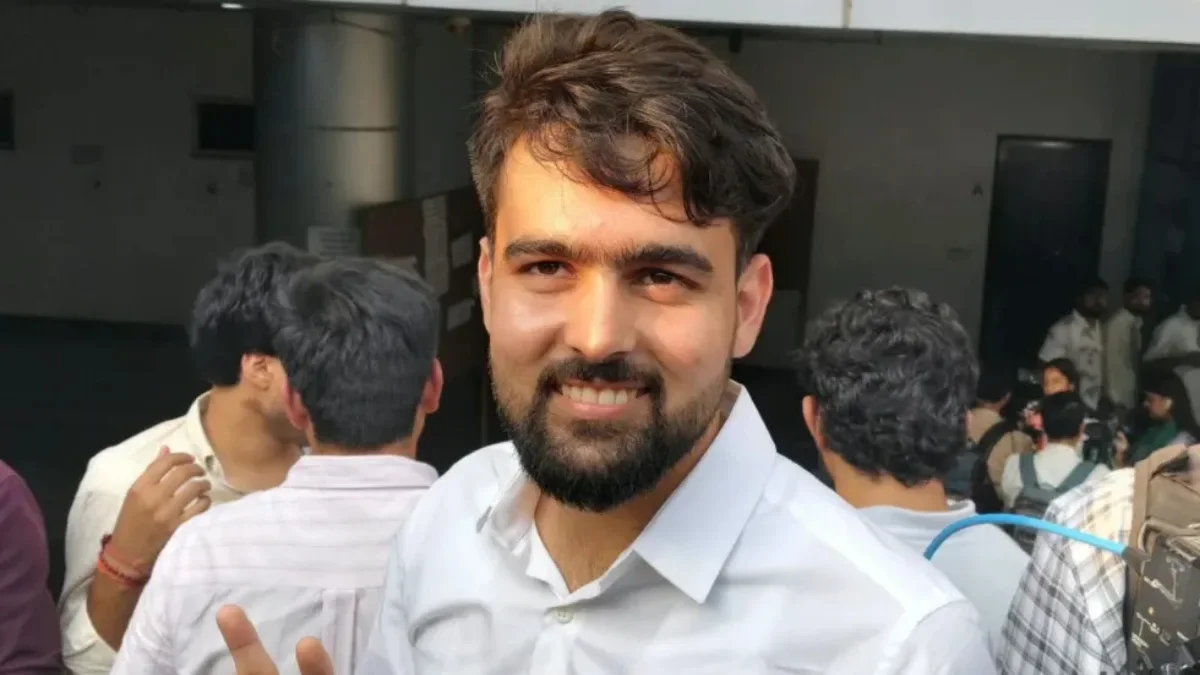
The 2026 Delhi University Students' Union (DUSU) elections delivered a historic surprise as independent candidate Deepanshu Shokeen secured the Vice-President's post. In a political landscape traditionally dominated by powerful student wings backed by national political parties, Shokeen’s victory stands out as a rare independent triumph. Securing over 30,000 votes, he outperformed contenders from the Akhil Bharatiya Vidyarthi Parishad (ABVP) and the National Students' Union of India (NSUI).
Who is Deepanshu Shokeen?
Hailing from Peeragarhi in Delhi, 21-year-old Deepanshu Shokeen comes from a modest background; his father works as a bus conductor and his mother serves as an Anganwadi worker. A graduate of Bhagat Singh College, Shokeen is currently pursuing his Master's degree at the Department of Buddhist Studies (Faculty of Arts) in Delhi University. Despite his father’s initial aspirations for him to pursue the civil services examinations, Shokeen chose to dive into active student advocacy.
Why Did He Run as an Independent?
Shokeen’s journey to the DUSU central panel took an unexpected turn shortly before the polls. Initially seeking a nomination from the Congress-backed NSUI, he filed his papers but parted ways with the organization after being asked to withdraw. Refusing to step back, he chose to contest independently. His campaign struck a deep chord with the student body, notably because he chose to walk barefoot across university campuses throughout his entire campaign trail. According to Shokeen, the physical discomfort served as a constant reminder of the daily hardships faced by ordinary students.
Impact and What Lies Ahead
While the ABVP swept the remaining three central panel posts—winning President, Secretary, and Joint Secretary—Shokeen's victory as a lone independent on the Vice-Chair seat marks a watershed moment for grassroots student politics. Having previously taken vocal stands on local student welfare issues, such as housing crises in student hubs like Satya Niketan, his ascent signals a growing preference among students for individual accountability over rigid party lines. As he steps into office, the university community will be watching closely to see how effectively the young leader translates his grassroots mandate into tangible reforms.