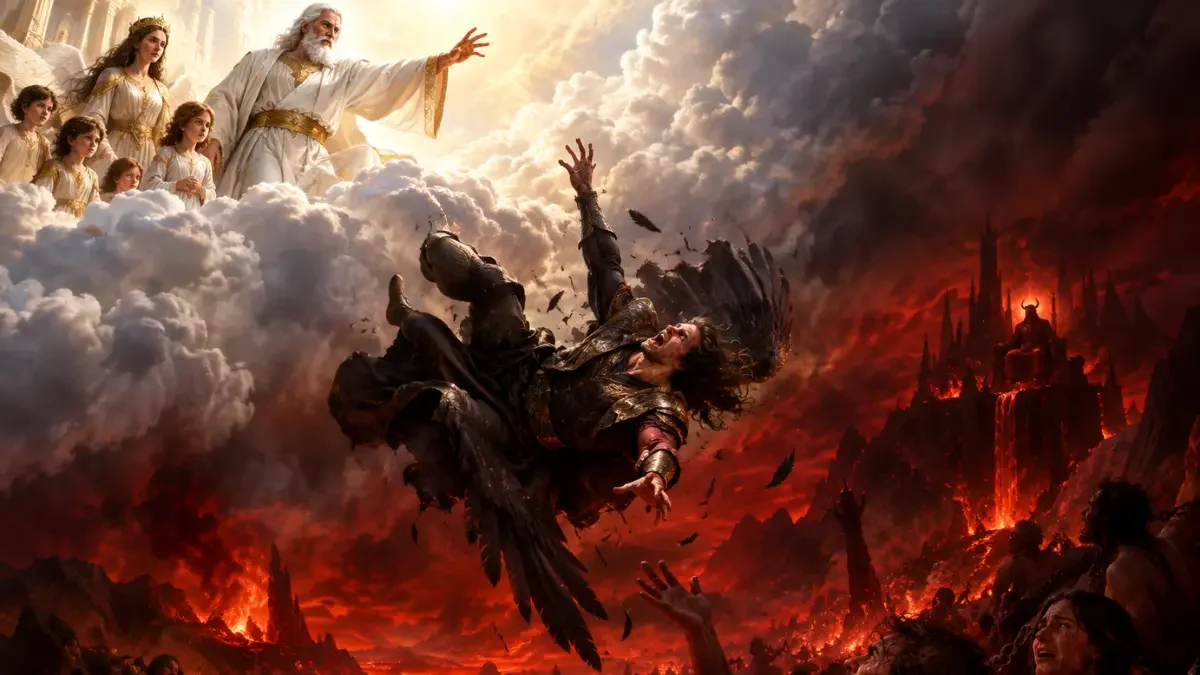
The ancient theological narrative of Lucifer’s expulsion from heaven remains one of the most compelling and dramatic stories in spiritual literature, often symbolizing the ultimate fracture between a creator and his favored creation. According to traditional interpretations, Lucifer was not merely an angel; he was the bearer of light, a supreme celestial being endowed with beauty, wisdom, and immense authority. However, an insurmountable ideological divide grew between the Almighty and the morning star, transforming a divine household into a theater of rebellion.
Why Did God Cast Lucifer Out of Heaven?
The core catalyst behind the expulsion was pride and a desire for absolute autonomy. Ancient texts and theological commentary suggest that Lucifer looked upon his own splendor and decided to elevate his throne above the stars of God. This was not a minor disagreement or a momentary lapse in judgment; it was a fundamental challenge to divine sovereignty. In any hierarchical structure, ultimate authority cannot coexist with a subordinate who seeks to usurp the throne. By demanding equality with the Creator, Lucifer crossed an invisible boundary, forcing a definitive celestial showdown that permanently altered the spiritual landscape.
Is Lucifer Innocent or Was He Misunderstood?
Modern cultural retellings frequently cast Lucifer in a sympathetic light, portraying him as a victim of divine autocracy or a misunderstood rebel who fought for free will. From this perspective, asking whether Lucifer is innocent depends entirely on the lens of interpretation. If viewed as a champion of individual liberty against an absolute monarch, some find him appealing. However, classical theology maintains that true innocence requires submission to moral truth and order. Lucifer's choice to rebel brought corruption and suffering into existence, stripping away any claim of absolute innocence by introducing discord where peace once reigned.
What Happened During the Fight Between Father and Son?
The conflict between God and Lucifer is often metaphorically framed as the ultimate father-son dispute. Like many earthly households where a headstrong son clashes with a patriarch over control, vision, and independence, this divine fallout escalated into a full-scale spiritual war. Michael and his angelic hosts engaged Lucifer and his followers in a fierce battle of wills and divine power. It was a clash of cosmic proportions where love and authority collided with rebellion and ambition, ultimately resulting in the defeat of the insurgents and their immediate expulsion from the heavenly realms.
Why Did God Make Him the King of Hell?
Banished from the pristine halls of eternity, Lucifer was cast downward and appointed to rule over the abyss, traditionally known as Hell. This appointment was neither a reward nor a promotion; rather, it was a designated containment zone for a rebel spirit. By making him the ruler of darkness, the divine order ensured that rebellion would consume itself within its own domain. Yet, ruling over a realm of eternal separation carries a profound irony: absolute power in a wasteland of despair is merely eternal imprisonment.
Why Does Lucifer Only Hear Screamings?
In popular imagination and theological folklore, the underworld echoes with perpetual wails and cries of anguish. As the ruler of this dark domain, Lucifer is surrounded not by adoring subjects, but by the very souls and entities consumed by the chaos he initiated. The eternal screaming serves as a haunting reminder of the cost of rebellion. Having chosen to fracture the ultimate relationship with the Creator, he is left to preside over a kingdom built on suffering, where the only soundtrack is the endless reverberation of human and spiritual brokenness.