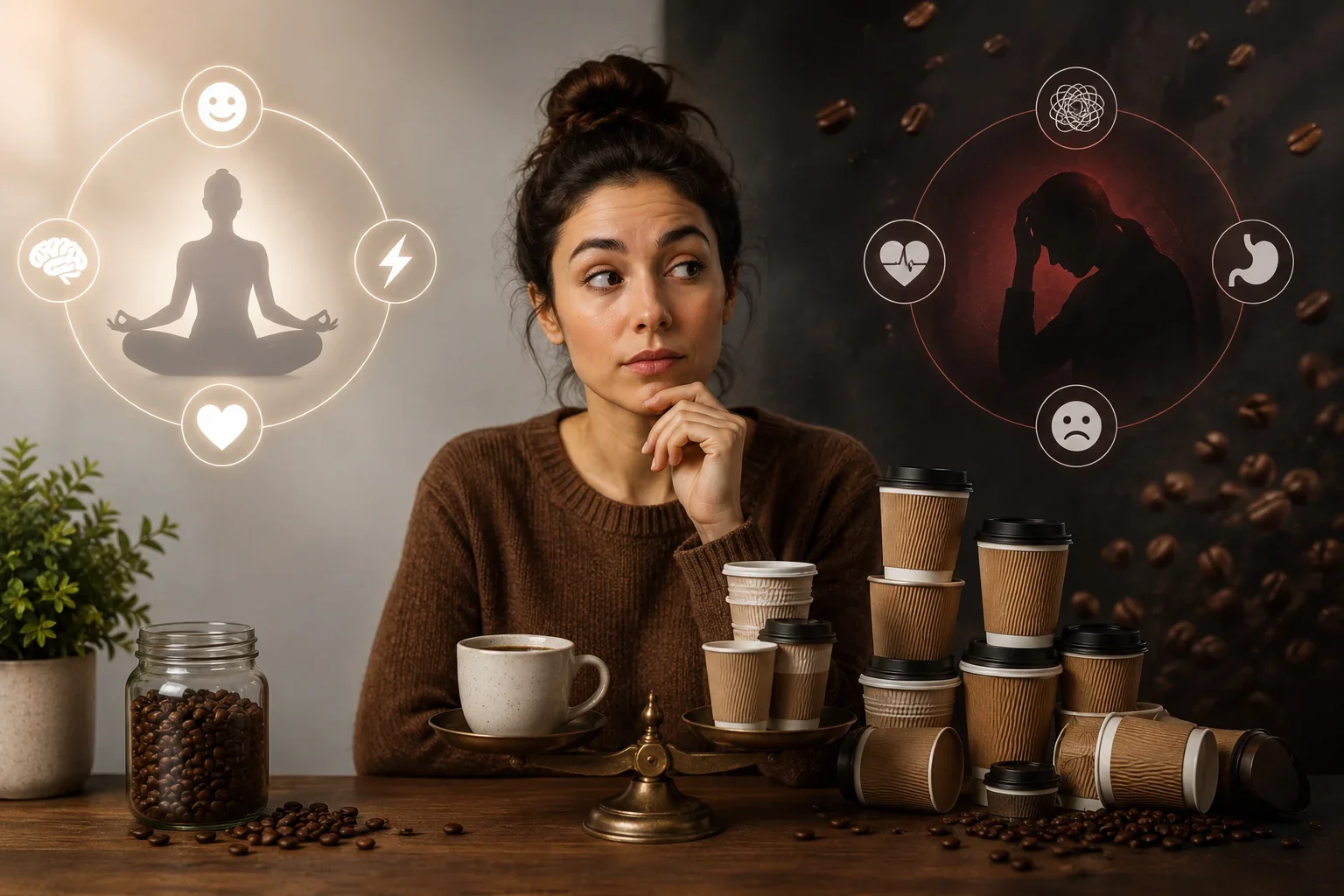
For millions of people, coffee is more than just a morning beverage. It is a daily ritual, a source of energy and, for some, the drink that helps them get through a busy day. But when one cup becomes three, four or even more, an important question arises: how much coffee is too much for your health?
The answer largely depends on the amount of caffeine you consume, your individual sensitivity and your overall health. For most healthy adults, the U.S. Food and Drug Administration (FDA) says up to 400 mg of caffeine per day is an amount not generally associated with negative effects. That can be roughly two to three 12-ounce cups of brewed coffee, although caffeine content varies significantly between drinks. (U.S. Food and Drug Administration)
How Much Coffee Can You Safely Drink?
There isn't a universal number of cups that is safe for everyone because coffee can contain very different amounts of caffeine.
The FDA notes that a 12-ounce serving of regular brewed coffee can contain approximately 113–247 mg of caffeine. This means that two large or strongly brewed coffees could already put some people close to the commonly cited 400-mg daily limit. (U.S. Food and Drug Administration)
Rather than counting cups alone, it is better to consider your total daily caffeine intake from coffee, tea, energy drinks, soft drinks, chocolate, supplements and certain medications.
What Happens When You Drink Too Much Coffee?
Excessive caffeine consumption can affect the body in several ways. Some people may notice symptoms even at amounts below 400 mg.
Common signs that you may be consuming too much caffeine include:
Feeling restless or jittery
Increased heart rate
Heart palpitations
Anxiety or nervousness
Difficulty sleeping
Headaches
Nausea
Upset stomach
Increased blood pressure
The FDA recommends paying attention to these symptoms because caffeine sensitivity varies from person to person. Certain medical conditions and medications can also make someone more sensitive to caffeine. (U.S. Food and Drug Administration)
Can Coffee Affect Your Sleep?
Yes. One of the most noticeable effects of excessive caffeine can be poor sleep.
Because caffeine is a stimulant, drinking coffee later in the day may make it harder for some people to fall asleep or stay asleep. If you regularly need coffee late in the afternoon or evening to stay awake, it may be worth examining whether your overall sleep routine needs attention rather than continually increasing caffeine consumption.
A simple approach is to monitor how your body responds to afternoon and evening coffee and consider moving your last caffeinated drink earlier in the day.
Is More Coffee Always Better for Energy?
Not necessarily.
Coffee can temporarily increase alertness, but increasing your intake isn't a sustainable replacement for adequate sleep, balanced meals and regular physical activity.
If you find yourself drinking several cups simply to function normally, that may be a sign that your body needs more rest rather than more caffeine.
Don't Forget About Hidden Caffeine
Your daily caffeine intake isn't limited to coffee.
Caffeine can also be found in:
Black and green tea
Energy drinks
Soft drinks
Chocolate
Pre-workout products
Caffeine supplements
Some over-the-counter medicines
The FDA specifically points out that caffeine can appear in products where consumers may not expect it. Even decaffeinated coffee isn't completely caffeine-free; decaf coffee typically contains a small amount of caffeine. (U.S. Food and Drug Administration)
What About Coffee During Pregnancy?
Pregnancy requires extra caution with caffeine.
The American College of Obstetricians and Gynecologists (ACOG) recommends limiting caffeine consumption during pregnancy to less than 200 mg per day. This includes caffeine from all sources, not just coffee. (ACOG)
Anyone who is pregnant, trying to become pregnant or breastfeeding should discuss their caffeine intake with their healthcare professional if they have concerns.
Who May Need to Limit Coffee More?
The 400-mg figure is not a target that everyone should aim for. Individual tolerance can vary considerably.
People who experience anxiety, sleep problems, palpitations or other caffeine-related symptoms may need to consume less. People taking certain medications or living with certain medical conditions may also be more sensitive to caffeine. The FDA recommends speaking with a healthcare professional if you are concerned about how caffeine interacts with a condition or medication. (U.S. Food and Drug Administration)
Children and teenagers are another group for whom caffeine deserves particular caution. The FDA notes that medical experts advise against energy drinks for children and teens. (U.S. Food and Drug Administration)
How to Cut Down on Coffee Without Feeling Terrible
If you've been drinking several cups every day and want to reduce your intake, don't necessarily stop suddenly.
Gradually reducing caffeine can make the transition easier. The FDA notes that caffeine withdrawal isn't considered dangerous, but it can be unpleasant. (U.S. Food and Drug Administration)
You could try:
Reducing the size of your usual coffee.
Replacing one regular coffee with decaf.
Moving your final coffee earlier in the day.
Tracking caffeine from other beverages and foods.
Gradually reducing the number of caffeinated drinks.
So, How Much Coffee Is Too Much?
For most healthy adults, up to 400 mg of caffeine per day is the commonly cited FDA level that is not generally associated with negative effects. But this doesn't mean everyone can drink four or five cups without consequences. Coffee strength, serving size and individual sensitivity can make a major difference. (U.S. Food and Drug Administration)
The better question isn't simply “How many cups of coffee can I drink?” It's “How much caffeine can I consume without affecting my sleep, mood or health?”
If coffee is causing jitters, anxiety, sleep disruption, a racing heartbeat or other unwanted symptoms, that's a good reason to cut back and discuss persistent symptoms with a healthcare professional.
This article is for general educational purposes and isn't a substitute for personalized medical advice.