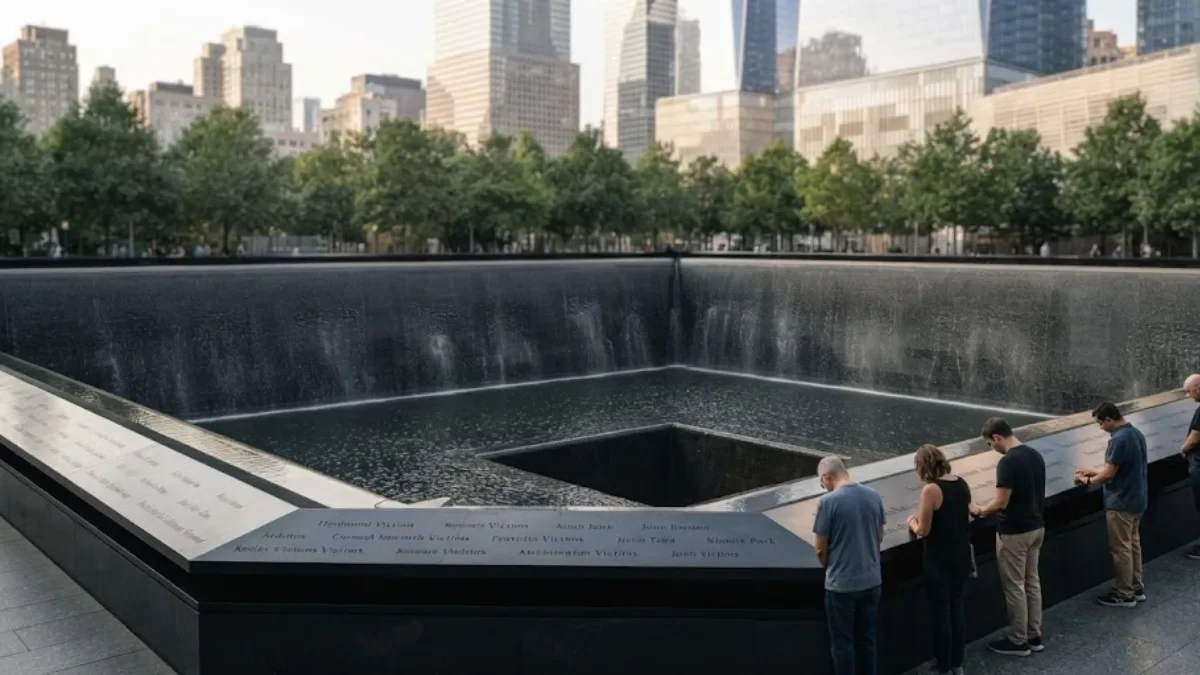
Twenty-five years ago, the course of modern history changed in a single morning. The United States and the global community are observing the solemn 25th anniversary of the September 11 terrorist attacks. As memorials take place across New York City, Virginia, and Pennsylvania, people around the world are pausing to remember the innocent lives lost and examining the deep, lasting consequences that continue to shape international security, aviation, and daily life a quarter-century later.
How Many People Died in the 9/11 Attacks?
The official and widely accepted death toll for the September 11 attacks stands at 2,996 people. This heartbreaking total includes the 19 al-Qaeda hijackers who carried out the coordinated suicide missions, meaning there were 2,977 innocent victims who lost their lives on that Tuesday morning in 2001.
The fatalities were distributed across four main locations:
The World Trade Center (New York City): The vast majority of the victims—roughly 2,750 people—perished when hijacked commercial airliners struck and ultimately collapsed the Twin Towers. This total includes hundreds of heroic first responders, comprising 344 firefighters and emergency personnel, as well as dozens of law enforcement officers.
The Pentagon (Arlington, Virginia): American Airlines Flight 77 was crashed into the military headquarters, resulting in 184 deaths, including military personnel and civilians inside.
Shanksville (Pennsylvania): United Airlines Flight 93 crashed into a field after brave passengers fought back against the hijackers, preventing the plane from hitting its intended target in Washington, D.C. All 40 passengers and crew on board died.
The Hijacked Flights: The overall toll includes all passengers, flight crew members, and the terrorists aboard the four aircraft.
Furthermore, thousands more individuals suffered physical injuries or developed long-term, life-threatening illnesses due to toxic dust exposure at Ground Zero in the years that followed.
What Was the Cause of the 9/11 Attacks?
The root cause of the tragedy stemmed from a meticulously planned conspiracy orchestrated by the extremist group al-Qaeda, led at the time by Osama bin Laden. Al-Qaeda targeted the United States due to its military presence in the Middle East, its foreign policy supporting regional governments, and its broader cultural and economic influence.
On the morning of September 11, 2001, 19 militants associated with the group successfully boarded four domestic commercial flights within the United States. Armed with box cutters, they hijacked the airplanes mid-flight, turning them into guided weapons. Three of the planes struck prominent American symbols of economic and military power—the Twin Towers and the Pentagon—while the fourth crashed in Pennsylvania due to the intervention of the passengers.
Impact and What Lies Ahead
The aftermath of 9/11 fundamentally reshaped global geopolitics, intelligence sharing, and domestic security. Governments worldwide overhauled aviation security protocols, leading to the creation of strict screening procedures at airports everywhere, including India. Agencies like the U.S. Department of Homeland Security were established, and international counterterrorism laws were rewritten.
As the world marks this 25-year milestone, the focus remains firmly on honoring the victims, supporting surviving families, and educating younger generations who did not witness the events firsthand. The anniversary serves as a reminder of collective resilience, unity, and the ongoing global challenge of balancing national security with fundamental civil liberties.
also read : Trump Rejects Saudi Call for U.S. Strikes on Houthis Amid Red Sea Crisis