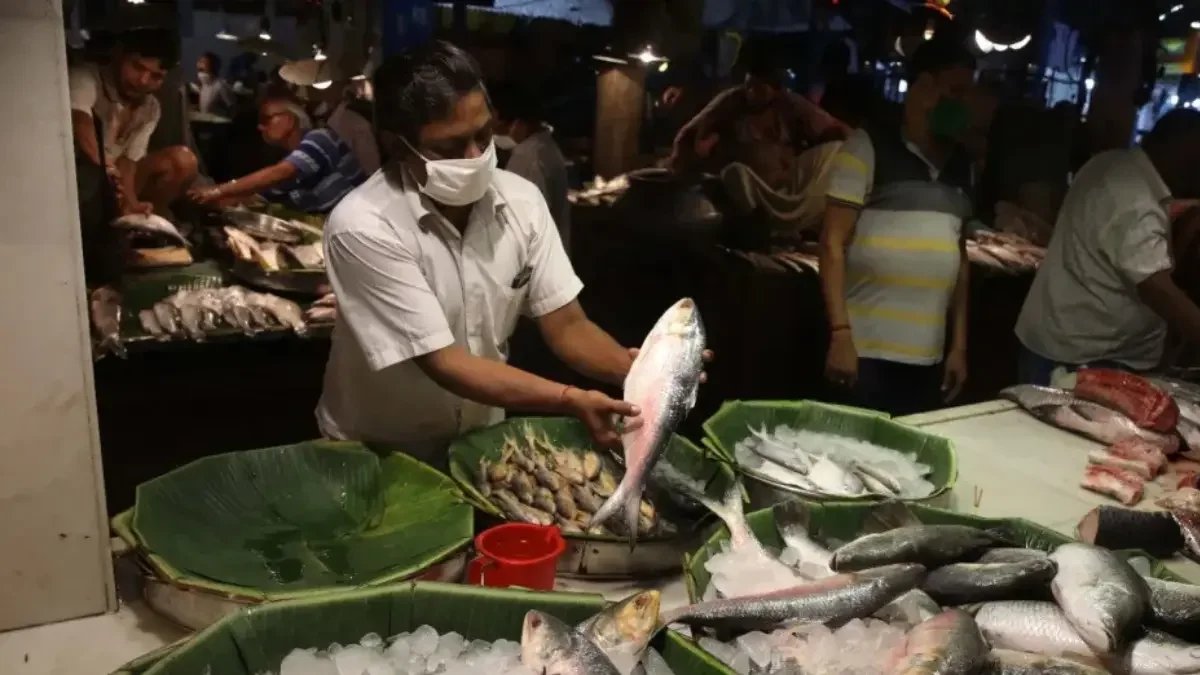
In an unprecedented shift in cross-border trade, India has transformed from an importer to an exporter of the prized Hilsa fish, sending around 500 metric tonnes to Bangladesh over the past two months. Traditionally, the trade direction has flowed in reverse, with Indian markets eagerly awaiting seasonal shipments of the coveted silver delicacy from Bangladesh, particularly ahead of the Durga Puja festival. However, recent production shortages in Bangladesh combined with a massive surge in Hilsa catch along the Gujarat coastline have completely flipped traditional market dynamics.
Why the Trade Flow Reversed
The primary catalyst behind this unusual trade reversal is a sharp spike in Hilsa production in Gujarat, where landings reached nearly 14,587.72 metric tonnes for the 2025–26 period—the highest in four years. While Gujarat's marine and riverine catch—particularly around Bharuch—surged, local Indian consumers exhibit limited demand for this specific regional variety due to its exceptionally high roe (egg) content. Conversely, this exact characteristic has created massive demand in regions of Bangladesh like Chattogram and Sylhet, where roe-filled Hilsa and extracted fish eggs are heavily sought after for local consumption and processing.
Impact on Trade and Festive Markets
With fish traders confirming that an additional 150 to 200 tonnes are slated for export in the coming weeks, the phenomenon has redefined commercial expectations. Fish importers in West Bengal have noted that while Gujarat supplies fill domestic gaps and support cross-border trade, uncertainty remains regarding whether Bangladeshi Padma river Hilsa will receive export clearances for the upcoming festive season. Trade associations have already reached out to authorities in Dhaka to secure standard festive import permissions, keeping hopes alive for traditional consumers in West Bengal, Assam, and Tripura.
What Lies Ahead
As fisheries experts evaluate whether this coastal boom represents a permanent ecological trend or a temporary seasonal fluctuation, the current economic reality highlights Hilsa's growing status as a versatile regional commodity. For ordinary consumers and wholesale traders alike, the ongoing market adjustment demonstrates how shifting ecological patterns and localized demand can successfully rewrite long-standing trade routes between neighboring nations.
Frequently Asked Questions (FAQ):
Why is India exporting Hilsa to Bangladesh? India is exporting Hilsa to Bangladesh due to a notable production surge along Gujarat's coastline and reported supply shortages within Bangladesh.
How much Hilsa has been exported so far? Indian traders have successfully exported around 500 metric tonnes of roe-filled Hilsa over the past two months, with another 150 to 200 tonnes expected soon.
Why is Gujarat Hilsa popular in Bangladesh? Gujarat Hilsa contains high amounts of roe (fish eggs), which are exceptionally popular in Bangladeshi regions like Chattogram and Sylhet for direct consumption and specialized processing.
Will India still import Hilsa from Bangladesh for Durga Puja? Fish importers in West Bengal have approached Bangladeshi authorities for festive import permits, but official clarity on traditional Padma river Hilsa imports remains pending.