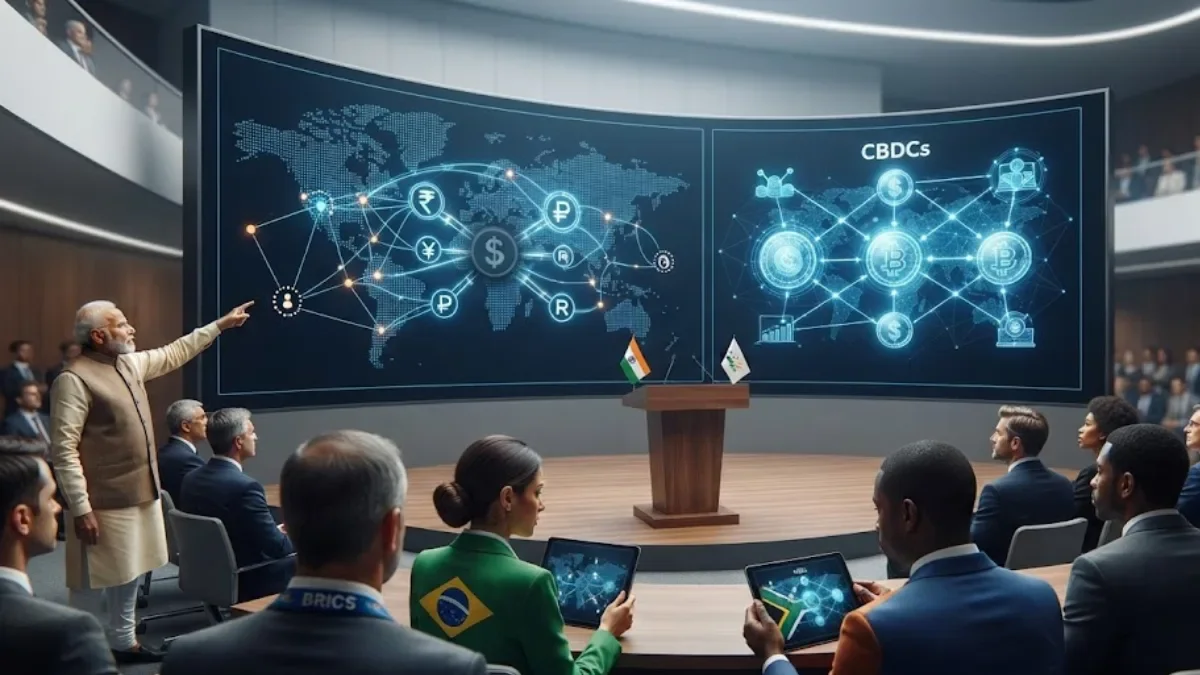
The conversation surrounding global financial independence and trade mechanics has intensified as leaders from emerging economies deliberate on alternative financial architectures. While viral reports frequently spark speculation about a physical BRICS banknote brandished by world leaders like Russian President Vladimir Putin, the reality of the bloc's financial strategy is far more nuanced. Rather than introducing a unified euro-style currency, member nations are actively pivoting toward local currency settlements and interconnected digital payment frameworks.
Understanding the BRICS Financial Strategy
For years, speculation has surrounded the idea of a shared BRICS currency designed to challenge the dominance of the US dollar in international trade. However, official stances from key member nations clarify that a unified monetary union is not currently being rolled out. During the 2024 summit in Kazan and continuing into the 2026 dialogues, discussions have instead centered on practical mechanisms to reduce transaction costs and mitigate vulnerability to secondary sanctions.
The primary focus has shifted toward the BRICS Cross-Border Payments Initiative, which explores linking national fast-payment systems and Central Bank Digital Currencies (CBDCs). This approach allows nations to trade using their native currencies—such as the Indian rupee, Chinese yuan, and Russian ruble—without needing a single supranational bank or currency.
India's Position and the Push for Local Currencies
As the chair of the bloc, India has maintained a clear boundary between de-dollarisation efforts and the creation of a separate common currency. Commerce and Industry Minister Piyush Goyal explicitly noted that India does not support introducing a separate BRICS currency. At the same time, the Reserve Bank of India (RBI) and financial authorities continue to champion bilateral trade agreements settled in local currencies and the internationalisation of payment systems like UPI.
This dual approach allows emerging economies to protect their domestic monetary policies while reducing heavy reliance on western-dominated messaging networks like SWIFT. By fostering direct currency swaps and payment system integration, member countries can streamline commerce and bolster economic resilience.
Why This Matters for Ordinary People and Global Trade
For everyday citizens and businesses engaged in international trade, these structural shifts translate to lower transaction fees, reduced currency conversion friction, and faster cross-border settlements. When nations trade directly in local currencies, exchange rate volatility tied strictly to dominant reserve currencies can be better managed.
Furthermore, the ongoing dialogues signal a broader multipolar economic shift. As trade corridors expand across the Global South, financial systems are adapting to reflect contemporary economic realities rather than post-war frameworks.
What Lies Ahead
The near-term future of BRICS financial cooperation will likely avoid a single physical banknote or a unified central bank. Instead, observers can expect incremental progress on digital payment interoperability, localized trade agreements, and enhanced financial intelligence sharing. As member states refine these frameworks, the global financial ecosystem is gradually evolving into a more diversified network of regional payment rails.
Frequently Asked Questions (FAQ):
Is there an official BRICS common currency being launched?
No, there is no official BRICS common currency or release timetable. Member nations are instead focusing on cross-border payment integration and local currency trade.What is India's stance on a shared BRICS currency?
India has stated that it does not support introducing a separate BRICS currency, preferring instead to promote local currency settlements and the internationalisation of its own payment rails like UPI.How do countries plan to trade without a common currency?
Countries are exploring the linkage of fast-payment systems, Central Bank Digital Currencies (CBDCs), and bilateral agreements that permit settlement in national currencies rather than relying solely on the US dollar.Why are BRICS nations trying to move away from the US dollar?
The push is driven by a desire to lower cross-border transaction costs, enhance trade efficiency, and protect emerging economies from the impacts of unilateral financial sanctions.