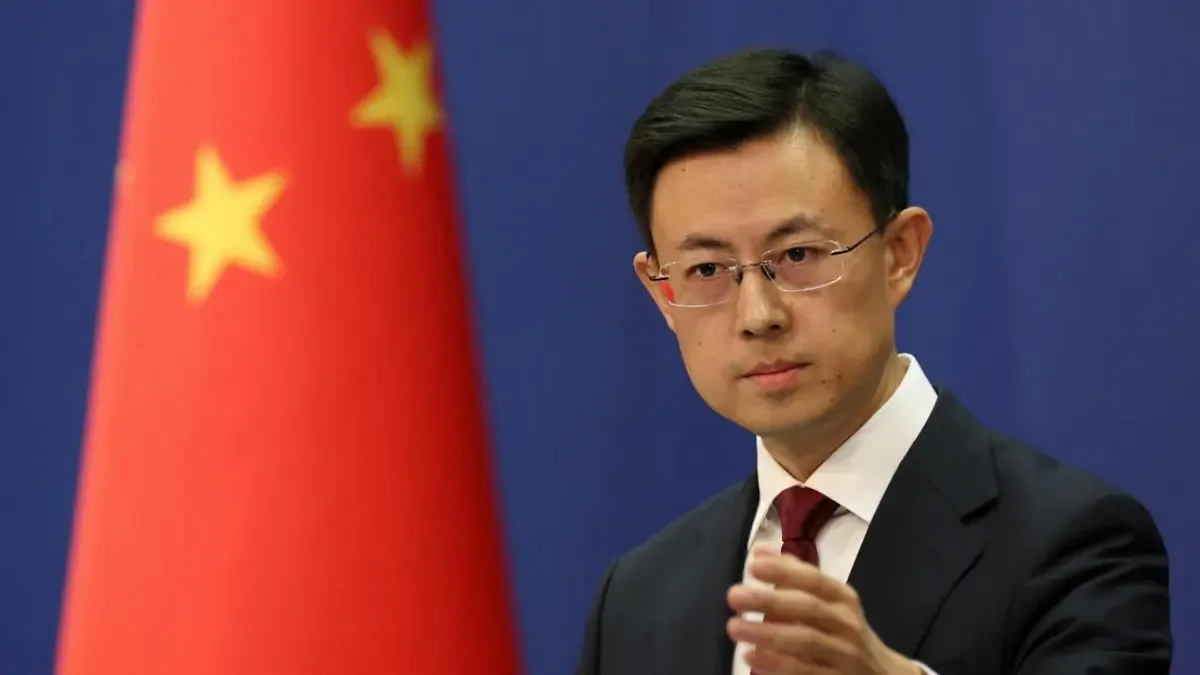
Geopolitical friction between global superpowers has officially moved beyond terrestrial borders. China has sharply criticized the United States, calling on Washington to "stop preparing for war in outer space". This strong diplomatic reaction follows a landmark public announcement by the U.S. Space Force confirming that it has operational weapons deployed in Earth's orbit for the first time.
During a regular media briefing in Beijing, Chinese Foreign Ministry spokesperson Guo Jiakun urged the U.S. side to halt its military expansion in orbit. Beijing warned that turning space into a battlefield poses a severe threat to global strategic stability and risks igniting an uninhibited arms race.
Why the U.S. Announcement is a Major Turning Point
The controversy erupted after U.S. Air Force Secretary Troy Meink revealed during a defense conference that the U.S. Space Force now maintains "on-orbit space control weapons" designed to safeguard the joint force against adversarial threats. While military officials declined to disclose specific technical details, capabilities, or testing timelines regarding these orbital systems, the public confirmation itself marks a major strategic shift.
Historically, major powers exercised caution regarding the overt militarization of space. Although the landmark 1967 Outer Space Treaty strictly prohibits weapons of mass destruction and nuclear arsenals in orbit, it does not explicitly ban conventional space-control technologies or satellite-defense systems. By openly acknowledging operational space-defense hardware, Washington has formally brought orbital warfare out of the shadows.
The Broader Impact on Global Security and Daily Life
The escalation of military capabilities in space carries profound implications. Modern global infrastructure depends heavily on orbital assets. Satellites drive critical daily functions, including global financial networks, weather forecasting, telecommunications, navigation systems, and intelligence-gathering operations.
Security analysts point out that any major conflict extending into orbit could cripple civilian communication lines and disrupt economies worldwide. Furthermore, Beijing and Moscow view these developments with deep suspicion. The U.S. Space Force explicitly cited both nations as primary strategic competitors driving its modernization efforts. Consequently, experts fear that Washington's public admission will prompt rival nations to accelerate their own counter-space programs.
What Lies Ahead for Space Governance?
As the international community watches closely, the risk of a retaliatory cycle in orbit continues to grow. When one nation expands its defensive or offensive footprint in space, rival powers often feel compelled to match those capabilities to maintain deterrence. Without renewed international dialogue, updated treaties, or clear rules of engagement for orbital assets, outer space risks transforming from a frontier of scientific collaboration into a permanent theater of geopolitical confrontation.
also read : Canada Investment Summit: Mark Carney Woos Global Capital Amid US Trade Clash