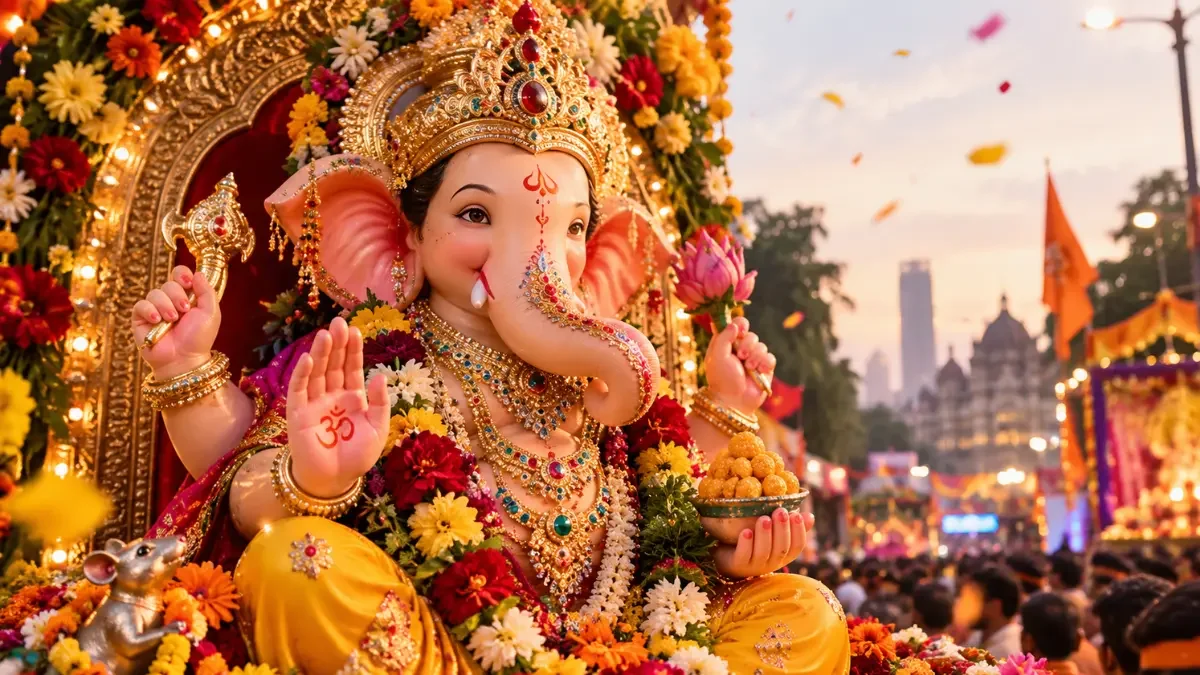
Ganesh Chaturthi stands as one of India's most vibrant and widely observed cultural celebrations, bridging spiritual devotion with massive community engagement. Spanning ten days, the festival transforms neighborhoods across the country as households and public committees welcome idols of Lord Ganesha into their spaces. While its roots are deeply spiritual, the celebration has evolved into a vital pillar of social unity and local economic activity, holding long-term significance that resonates far beyond the final day of immersion.
Historical Roots and Modern Community Significance
The modern public celebration of Ganesh Chaturthi owes much to freedom fighter Lokmanya Tilak, who transformed it from a private household ritual into a public event in the late 19th century. His goal was to unite people across various social strata during British rule, using the platform for educational and cultural exchanges. Today, this legacy continues through massive public pandals that serve as community hubs. These spaces host cultural programs, blood donation camps, and social awareness campaigns, proving that the festival functions as more than just a religious observance.
The Economic Ripple Effect on Local Artisans
Beyond its cultural value, Ganesh Chaturthi anchors a massive seasonal micro-economy. Months before the festival begins, traditional artisans and sculptors, known as karmakars or shilpakaars, work tirelessly to craft idols from eco-friendly clay and natural colors. The festival directly supports millions of livelihoods, including florists, small-scale vendors, lighting technicians, and sweet makers who prepare traditional delicacies like modaks. This surge in consumer demand provides a substantial financial cushion for small businesses and independent artisans who rely heavily on seasonal festivities.
Environmental Evolution and Sustainable Practices
In recent years, the conversation surrounding Ganesh Chaturthi has increasingly focused on environmental sustainability. Traditional practices involving non-biodegradable paints and plaster of Paris have prompted concerted shifts toward eco-friendly alternatives. Municipal corporations, environmental groups, and local communities are actively promoting water-soluble clay idols and artificial immersion tanks to protect local water bodies. This gradual transition highlights a growing awareness of ecological preservation without compromising cultural heritage.
Outlook and Long-Term Impact
As urban spaces expand and communities modernize, Ganesh Chaturthi continues to adapt while retaining its core values of togetherness and devotion. The festival's ability to foster social harmony, support grassroots commerce, and inspire eco-conscious adaptations ensures its enduring relevance. For millions across India, it remains a defining annual milestone that reinforces communal bonds and keeps traditional craftsmanship alive for future generations.
Frequently Asked Questions (FAQ)
What is the primary cultural significance of Ganesh Chaturthi? Ganesh Chaturthi celebrates the birth of Lord Ganesha, the remover of obstacles and the god of new beginnings. Publicly, it serves as a powerful platform for community bonding, social cohesion, and cultural expression.
How does Ganesh Chaturthi impact the local economy? The festival creates a massive seasonal boost for local markets, supporting millions of small-scale vendors, traditional clay sculptors, flower merchants, and event organizers across the country.
Why is there a growing focus on eco-friendly celebrations? To protect water bodies and reduce environmental pollution, authorities and communities are increasingly adopting clay idols, natural colors, and designated artificial tanks for the immersion (visarjan) ritual.
How long do the public celebrations typically last? The main festival spans ten days, beginning on Chaturthi and culminating on Anant Chaturdashi with the grand immersion procession.