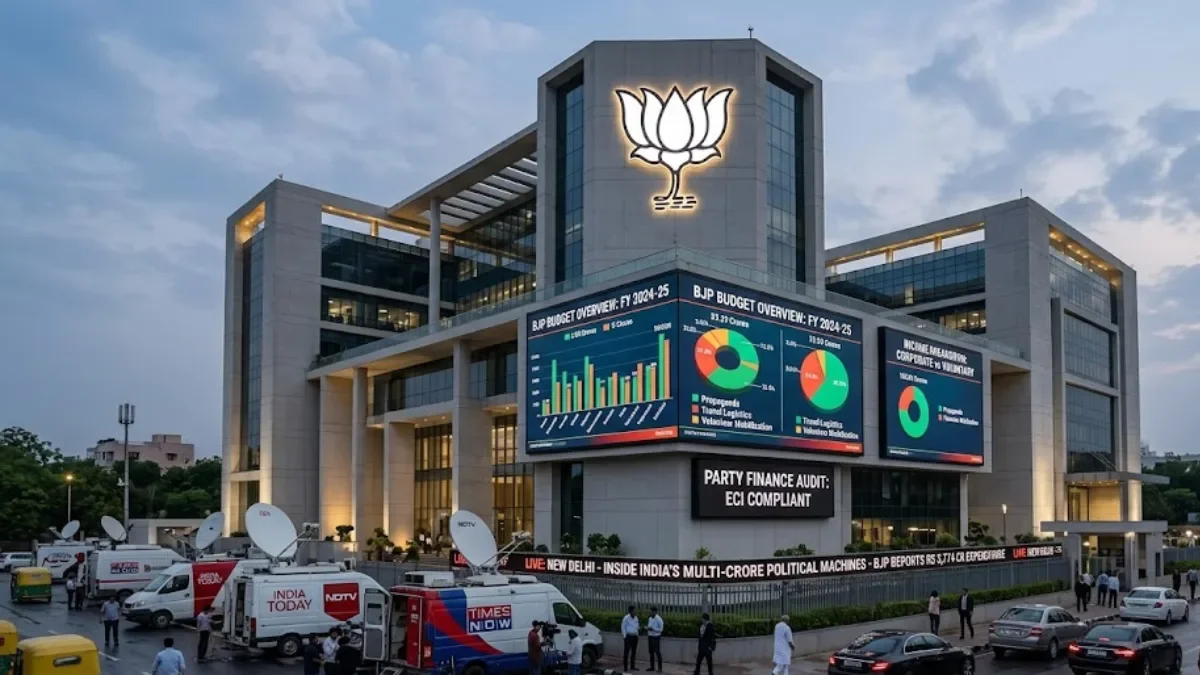
Political parties in modern India have evolved far beyond basic grassroots movements. Today, operating a national political organization requires financial management, structural logistics, and strategic planning comparable to large corporate conglomerates. Annual financial disclosures submitted to the Election Commission of India (ECI) highlight that running a national campaign involves managing thousands of crores, directing vast networks of volunteers, and allocating funds across digital media, logistics, and ground events.
The Numbers Behind National Political Operations
Data compiled by independent political observers and electoral auditing bodies reveals that political funding and expenditure reach massive scales. For instance, in the audited filings for Financial Year 2024-2025 submitted to the ECI, the ruling Bharatiya Janata Party (BJP) declared an total annual income of ₹6,769.14 crore. Over 80% of this revenue came through voluntary contributions and trust donations. Out of this sum, the party spent approximately ₹3,774.58 crore, with the vast majority allocated directly to general election propaganda, publicity, and travel logistics.
In comparison, the Indian National Congress (INC) reported an income of ₹918.28 crore for the same period. These audited financial reports demonstrate that political parties must balance massive operational balance sheets, maintain cash reserves, and track administrative costs, staff salaries, and outreach expenses year-round.
How Political Budgets Are Allocated Across Departments
Managing a political machine with millions of workers and volunteers demands systematic resource distribution. Political expenditure is structured into key budget channels:
Advertising and Public Relations: Spending on TV advertisements, print media, social media teams, influencer marketing, and billboard campaigns.
Travel and Operations: Transporting star campaigners across states via chartered flights, helicopters, and motorcades.
Ground Infrastructure and Volunteer Mobilization: Managing regional offices, organizing rallies, and distributing campaign material to cadre networks.
Administrative Expenses: Maintaining nationwide party offices, staff salaries, legal fees, and administrative upkeep.
Why Financial Operations Matter to Citizens
How political parties source and deploy capital directly impacts public policy, transparency, and democracy. Following the Supreme Court of India's decision to strike down the Electoral Bonds scheme in early 2024, corporate donations shifted primarily toward transparent Electoral Trusts. Higher financial transparency allows ordinary citizens and voters to evaluate potential corporate influence, maintain accountability, and understand the economics behind national policy decisions. As political organizations scale their outreach, corporate-style governance within parties will remain a crucial subject of public scrutiny.
also read : Khadim Batti Dies at 49: Whatfix Co-Founder and CEO Passes Away After Cardiac Arrest