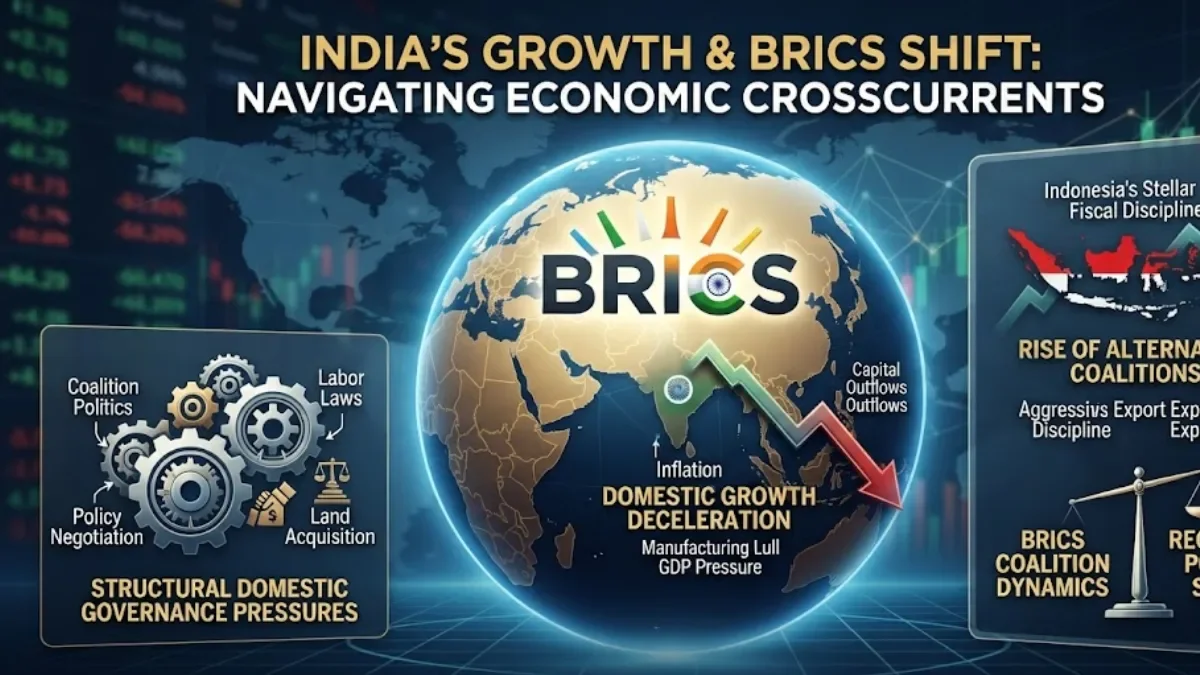
Economic growth serves as the fundamental engine for any major developing nation seeking global geopolitical influence. In recent quarters, macroeconomic headwinds such as stubborn inflation rates, capital outflows, and constrained manufacturing momentum have led various global financial institutions to downwardly revise India's near-term growth trajectory.
A lower GDP expansion rate relative to other emerging markets triggers intense scrutiny from foreign investors. Sustaining high productivity and rapid industrialization is vital to maintaining an authoritative voice in multilateral economic forums. When domestic growth slows, questions naturally arise regarding resource allocation, infrastructure bottlenecks, and the structural reforms required to regain high-octane economic momentum.
The Rise of Alternative Regional Coalitions
As economic weight shifts dynamically across the Global South, nations like Indonesia are accelerating their developmental strides. Indonesia has steadily advanced its economic standing through robust domestic consumption, rich natural resources, and strategic integration into international frameworks.
Speculation regarding whether rapidly growing Southeast Asian economies could shadow or substitute traditional emerging market weights stems from their stellar fiscal discipline and aggressive export expansions. However, economic experts emphasize that major coalitions are typically additive rather than zero-sum; Indonesia's ascent and integration into broader frameworks reflect a broader decentralization of global economic power rather than the literal displacement of foundational giants like India.
Coalition Dynamics and Domestic Governance Pressures
Domestic political structures also play a profound role in how effectively a nation can execute long-term economic policies. Coalition governance models, while deeply democratic and representative, often necessitate complex political negotiations that can occasionally delay critical structural reforms, labor market updates, and land acquisition laws.
When coalition politics intersects with sluggish economic performance, policy paralysis becomes a central concern for international trade partners and investors. Streamlining decision-making processes and fostering bipartisan consensus on economic modernization are crucial steps for any nation looking to insulate its global standing from domestic political friction.
Future Outlook for Global Economic Frameworks
The architecture of global cooperation is undergoing a profound transformation. Multilateral blocs are no longer defined solely by rigid historical acronyms but by flexible, multi-alignment strategies where nations cooperate on trade, de-dollarization, and technological exchange.
For India, addressing structural bottlenecks, accelerating infrastructure investments, and leveraging its immense demographic dividend remain the ultimate antidotes to short-term economic anxieties. Whether the discourse centers on growth rates or coalition governance adaptability, the path forward relies on decisive economic execution rather than speculative geopolitical shifts.
also read : Kioxia US Listing AI Spotlight