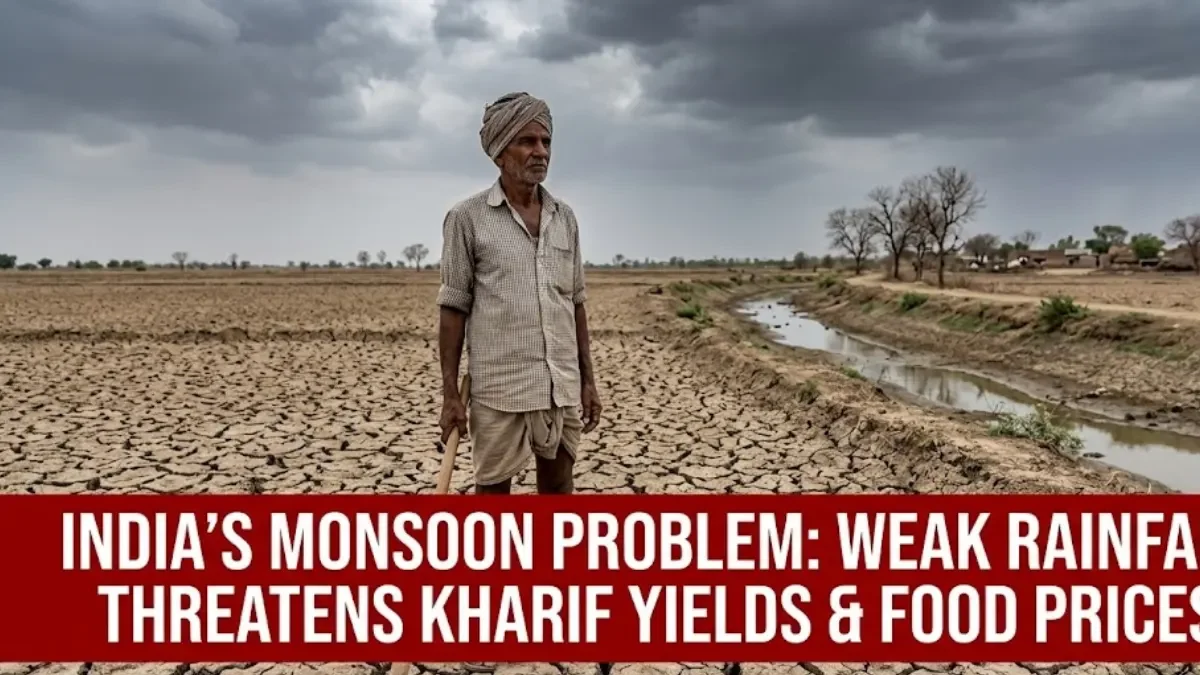
The uneven distribution of the southwest monsoon has emerged as a key challenge for Indian agriculture, raising questions about food production and household budgets. Cumulative rainfall deficits in several key agricultural states have delayed the sowing of essential Kharif (summer) crops. While parts of central and northern India experienced brief spells of heavy downpours, agricultural belts in southern and eastern regions continue to face persistent moisture shortfalls.
Why are reservoir levels a major concern?
Beyond the immediately visible delayed planting, the shortfall has severely affected live storage across the nation's major dams and irrigation reservoirs. Reports from central water authorities show that water levels in dozens of key reservoirs remain significantly below the historical average for this period. This deficit not only strains standing summer crops like rice, pulses, coarse cereals, and oilseeds, but it also creates severe uncertainty for the upcoming Rabi (winter) season. Farmers rely heavily on residual reservoir storage to irrigate crops like wheat, mustard, and gram during the dry winter months.
How does this affect food inflation and ordinary households?
Lower planted acreage and stressed crop stands typically translate into tighter market supplies after harvest. Essential kitchen staples—such as pigeon peas (tur dal), onions, and edible oils—are particularly sensitive to weather disruptions. When local yields drop, market supply contracts, leading to potential price spikes in retail markets. Higher food inflation directly squeezes urban family budgets while failing to benefit farmers whose overall harvest volumes have fallen.
What lies ahead for farmers and the government?
Agriculture accounts for a significant share of Indian employment, and weakened harvests directly impact rural consumer spending. Reduced farm revenues mean lower demand for consumer goods, vehicles, and agricultural machinery across rural markets. To mitigate potential supply shortages, policy focus is shifting toward public buffer stocks, strategic imports of pulses, and strict monitoring of market trade. The final yield output will depend heavily on late-season rainfall distribution and proactive policy interventions during the harvesting period.
Frequently Asked Questions (FAQ)
Q1: What is the main reason for the current monsoon deficit in India?
The shortfall is primarily caused by uneven spatial distribution and periodic dry spells driven by changing oceanic and atmospheric conditions, leaving key agricultural regions without adequate rainfall during crucial planting windows.
Q2: Which crops are most affected by weak monsoon rainfall?
Kharif crops such as rice, pulses (like tur and urad), oilseeds, cotton, and coarse cereals (like maize and bajra) are most vulnerable because they rely heavily on initial seasonal rains for proper germination and growth.
Q3: How do low reservoir levels impact the winter (Rabi) season?
Reservoirs supply necessary irrigation water during non-rainy months. If dams are not adequately filled by the end of the monsoon, farmers face water rationing for winter-sown crops such as wheat, mustard, and chickpeas.
Q4: Will a weak monsoon automatically cause high food inflation?
Not necessarily. While reduced crop production creates upward price pressure, government interventions—such as releasing public grain reserves, regulating exports, and lowering import duties on items like pulses and edible oils—help stabilize domestic retail prices.
also read : Nepal Himalayan Flood Crisis: PM Shah Demands Global Climate Action as Disaster Toll Mounts