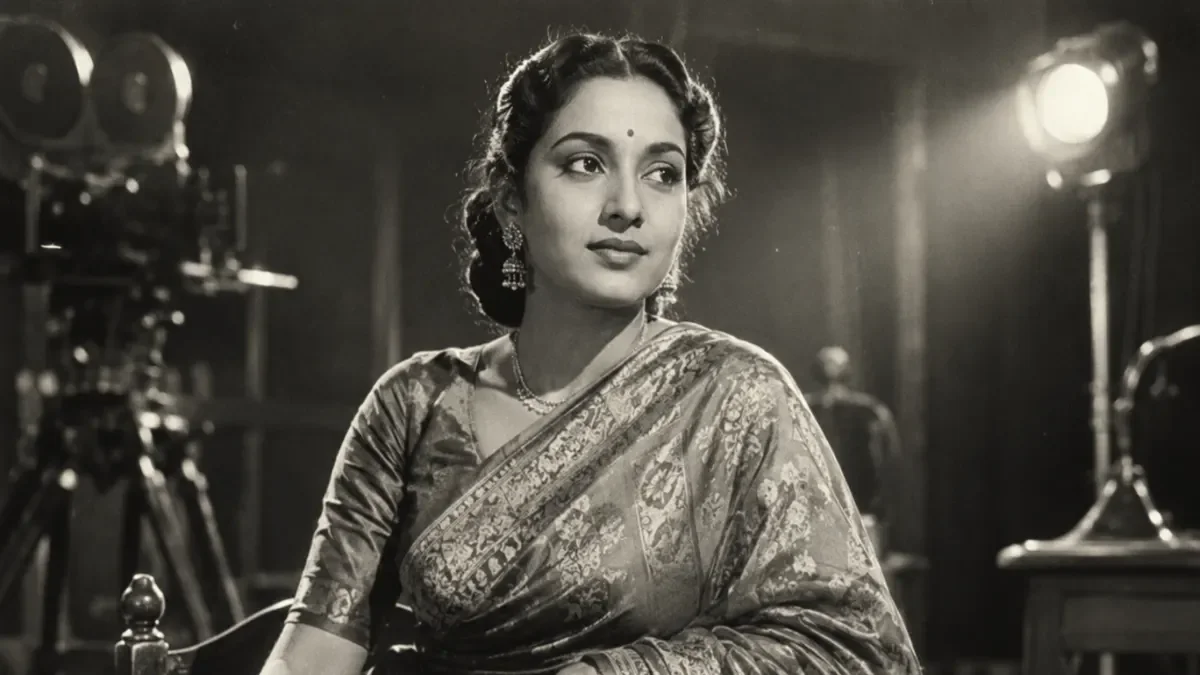
Long before modern cinema established female empowerment narratives, Leela Chitnis was quietly breaking every social barrier in pre-independence India. Married at just 15 or 16 and a mother of four boys shortly after, Chitnis refused to let societal expectations dictate her future. After divorcing her husband, she pursued higher education, earning a Bachelor of Arts degree at a time when women rarely entered college, making her one of Indian cinema’s first graduate actresses.
Resistance, Independence, and the Freedom Movement
Chitnis was never just an artist; her life was deeply intertwined with India’s struggle for independence. Alongside her former husband, Dr. Gajanan Chitnis, she actively supported freedom fighters, even risking severe colonial crackdowns by harbouring Marxist revolutionary M.N. Roy in their home. When financial necessity led her to act, she started as an extra and theater artist before rising to prominence with Bombay Talkies.
A Trailblazer in Commercial Cinema
Her impact on Indian pop culture was swift and historic. In 1941, Chitnis became the very first Indian actor to endorse Lux soap, a privilege previously reserved exclusively for Hollywood stars. Her pairing with Ashok Kumar in classics like Kangan (1939), Bandhan (1940), and Jhoola (1941) set early box-office records. Kumar famously credited Chitnis with teaching him how to express deep emotions through facial expressions and eye movements rather than theatrical dialogue.
Defining the Archetypal On-Screen Indian Mother
As fresh faces emerged in the late 1940s, Chitnis smoothly transitioned into character roles instead of stepping away. She effectively pioneered the self-sacrificing, noble, and frequently ailing mother trope in Indian cinema—a archetype later carried forward by actors like Nirupa Roy.
Chitnis played mother figures to generations of leading stars, including Dilip Kumar in Shaheed (1948) and Ganga Jumna (1961), Raj Kapoor in Awaara (1951), and Dev Anand in Guide (1965). Her final screen appearance came in 1985 with Dil Tujhko Diya.
Her legacy remains vital today as a testament to female agency, showing how personal resilience and talent reshaped both the cultural landscape and advertising industry in India.