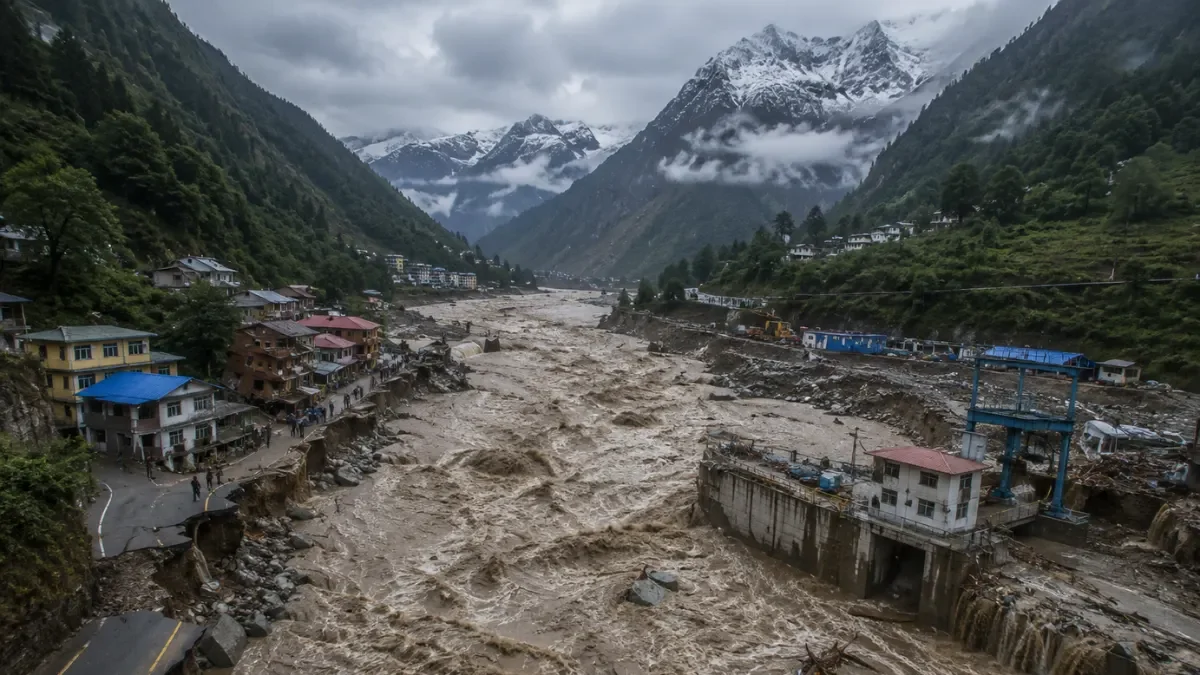
A catastrophic flash flood triggered by an ice and rock avalanche near the Nepal-Tibet border has devastated northern and central Nepal. In the aftermath of the tragedy, Nepalese Prime Minister Balendra Shah explicitly linked the catastrophe to rapid climate change in the fragile Himalayan ecosystem, urging international powers to take responsibility for rising temperatures that threaten downstream communities.
The disaster struck when a massive glacier fragment collapsed from high altitude into the upper reaches of the Bhotekoshi River in Rasuwa district. The resulting torrent swept down steep mountain terrain, destroying bridges, damaging hydropower project tunnels, and burying entire settlements under mud and heavy debris. Official reports from Nepal's National Disaster Risk Reduction and Management Authority confirm that the death toll has crossed 1,000, with thousands of people—including local residents, tunnel workers, and foreign tourists—still reported missing as rescue personnel wade through thick silt and rubble.
In a public statement, Prime Minister Shah cited expert assessments concluding that the disaster was an extraordinary event rather than a routine seasonal flood. He highlighted data indicating that temperatures in the Himalayan region have increased by approximately 1.8 degrees Celsius, accelerating glacial melt and destabilizing mountain slopes. Shah argued that vulnerable, lower-emission nations like Nepal bear an unfair burden of global climate impacts and called on the international community to provide dedicated climate financing and disaster recovery support.
The broader impact of this tragedy extends across the entire Himalayan belt, raising serious concerns for neighboring nations including India. Accelerated glacial retreat in the High Himalayas threatens water security, hydropower generation, and river basin infrastructure across South Asia. For local populations, the immediate challenge centers on locating survivors, preventing waterborne disease outbreaks, and securing emergency shelter for thousands left homeless.
Moving forward, Nepalese authorities face a dual imperative: accelerating difficult search and rescue operations while overhauling disaster readiness protocols. As global climate summits approach, Nepal plans to leverage the Bhotekoshi tragedy as a stark example of the urgent need for international climate compensation and proactive environmental protection in the fragile Himalayas.