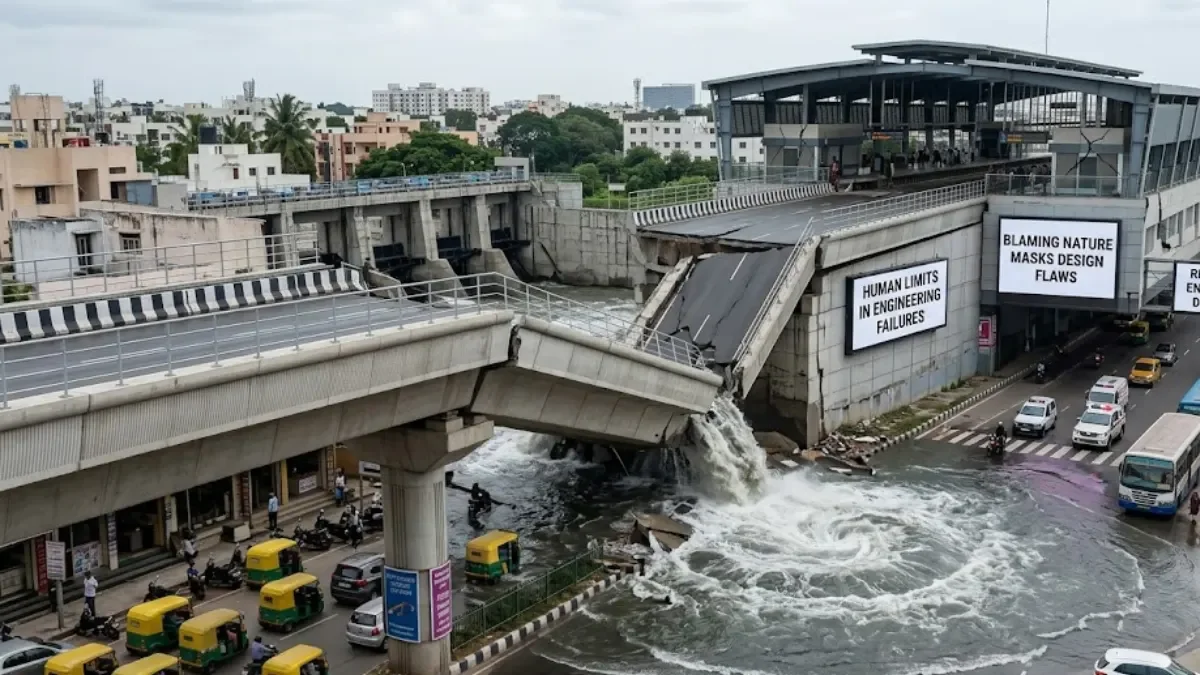
When major dams collapse or transit lines fail during severe storms, public statements frequently point toward unprecedented natural conditions. However, ongoing multidisciplinary analyses reveal a different reality: human biological limitations and fundamental engineering flaws are often masked by shifting the blame onto nature. Modern infrastructure is failing not because nature is inherently unpredictable, but because human sensory perception and cognitive processing were never evolved to handle the vast complexity of massive technological systems.
The Human Perception Gap
Human biological senses evolved to process local, immediate environmental signals. In complex modern engineering—such as power grids, chemical processing plants, and nuclear safety systems—critical signals occur beyond human perception across invisible electrical, thermal, or micro-structural spectrums. Studies in engineering safety demonstrate that structural failures routinely stem from insufficient knowledge, underestimation of environmental factors, and blind spots in design rather than sudden "acts of God". When engineers miscalculate structural tolerance, human perception fails to grasp cumulative stresses until catastrophic failure occurs.
Why "Blaming Nature" Prevents Real Solutions
Categorizing technological and structural breakdowns as natural calamities obscures accountability. While extreme weather events act as stress tests, the failure itself originates in design choices, skipped safety audits, or poor urban planning. Framing these events as natural disasters shifts public attention away from actionable engineering solutions—such as rigorous redundant safety checks, automated sensory networks, and climate-resilient material standards.
Impact and the Path Forward
For communities vulnerable to infrastructure damage, this shift in perspective is critical. When safety frameworks rely solely on human oversight without accounting for cognitive fatigue and sensory limits, system failures become inevitable. To build resilient societies, disaster management and civil engineering must integrate human-factor design, acknowledging that human perception is limited and that infrastructure must be built to withstand predictable natural dynamics rather than using nature as a scapegoat.
also read : Keyaa Banerji Wins Silver at IPF World Championships After 140kg Deadlift