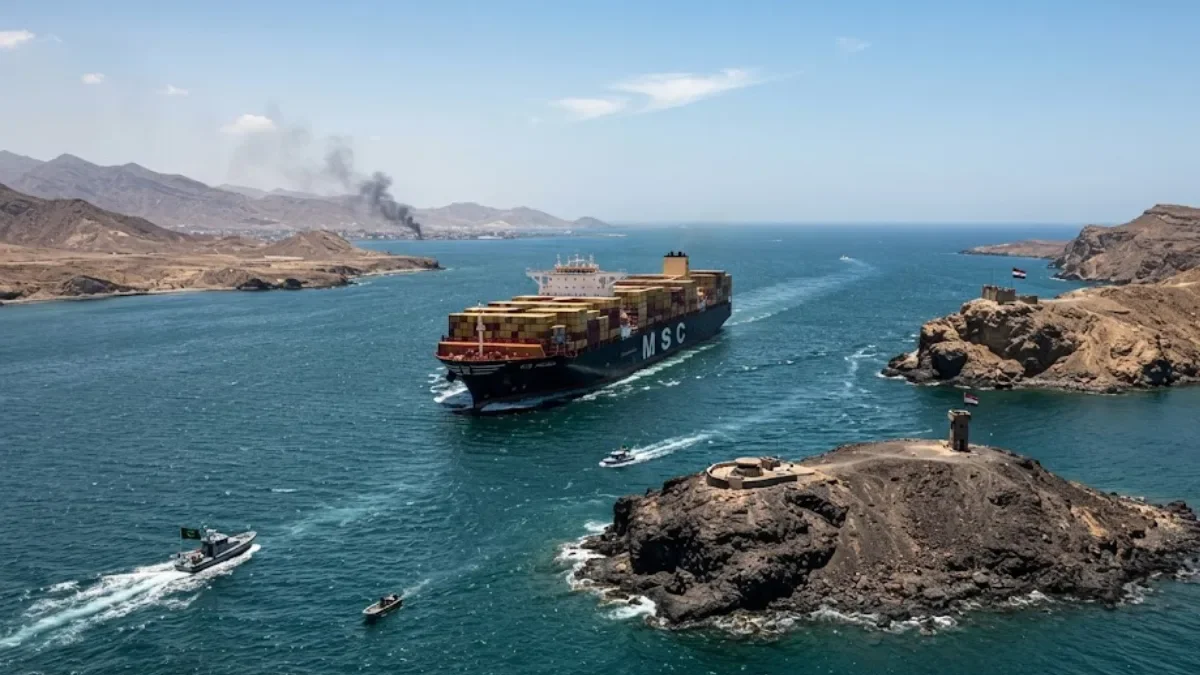
The security situation in West Asia has taken a sharp and dangerous turn as Iran-backed Houthi forces launched a rapid offensive along Yemen’s western coastline. Capturing the historic port city of Mocha and the strategic Perim (Mayun) island within the Bab al-Mandeb Strait, the rebel group has established a direct foothold on one of the world's most critical maritime chokepoints. In response, Saudi-backed government forces and the Royal Saudi Air Force have initiated retaliatory military actions, igniting a fierce exchange of strikes that threatens regional stability and international trade.
What Happened Along the Red Sea Coast?
The escalation began when Houthi fighters swept southward through Yemen's Red Sea coast, overwhelming government-held positions. By mid-September 2026, the group advanced onto Perim Island, a tiny volcanic outcrop sitting roughly 3.5 kilometers off the coast inside the Bab al-Mandeb Strait. This lightning territorial gain shattered years of relative calm that followed the 2022 UN-brokered truce.
In direct retaliation, Saudi forces launched airstrikes targeting infrastructure around Mocha, while Saudi authorities temporarily shut down a major domestic oil pipeline following separate drone strikes. The cross-border violence also saw projectiles strike southern Saudi regions, injuring civilians and damaging local infrastructure, prompting strict civil defense warnings and emergency protocols.
Why the Bab al-Mandeb Strait Matters
The Bab al-Mandeb—meaning the "Gate of Tears"—is the southern gateway connecting the Red Sea to the Gulf of Aden and the Indian Ocean. It serves as an indispensable artery for international commerce, carrying a massive percentage of global crude oil, fuel, and consumer goods toward the Suez Canal and European markets.
When shipping disruptions occurred here in previous years, global freight costs, insurance rates, and delivery times soared as cargo liners were forced to reroute entirely around Africa's Cape of Good Hope. With the Houthis now overlooking this narrow passage, shipping companies and energy markets are on high alert, pushing crude prices past the 100-dollar mark and amplifying economic anxieties worldwide.
Impact on Regional Stability and Ordinary People
For ordinary citizens in Yemen, the renewed fighting risks plunging the nation back into an intense civil war, exacerbating an already catastrophic humanitarian crisis where millions face food insecurity. The International Organization for Migration has reported tens of thousands of new displacements within days as families flee the coastal violence. Meanwhile, businesses and consumers globally face potential supply chain delays and inflationary pressures if maritime security through the corridor deteriorates further.
What Could Happen Next?
International bodies, including the United Nations Security Council, have convened emergency sessions to urge restraint and protect freedom of navigation. While Houthi leadership claims that general commercial shipping remains safe from their operations—barring vessels linked to Saudi Arabia—military analysts warn that the situation remains extremely volatile. Yemen's internationally recognized government is plotting counter-offensives to retake lost positions, and diplomatic channels are working frantically to prevent a wider regional conflagration.
Frequently Asked Questions (FAQ)
What is the Bab al-Mandeb Strait and why is it important?
The Bab al-Mandeb Strait is a crucial maritime chokepoint connecting the Red Sea to the Gulf of Aden. It is vital for global trade and energy supplies, as a significant portion of the world's oil and commercial cargo passes through it daily on the way to the Suez Canal.
Why did fighting escalate between Saudi Arabia and the Houthis?
The recent escalation was triggered by a rapid Houthi offensive along Yemen's western coastline that seized Mocha and Perim Island. This prompted Saudi Arabia to launch retaliatory airstrikes and secure its borders after cross-border drone and projectile attacks hit Saudi territory.
Are global shipping routes currently blocked?
Houthi spokespersons have stated that commercial navigation remains safe for non-Saudi vessels; however, the proximity of armed conflict to the shipping lanes has heightened security fears, pushing up insurance and freight costs and unsettling global markets.