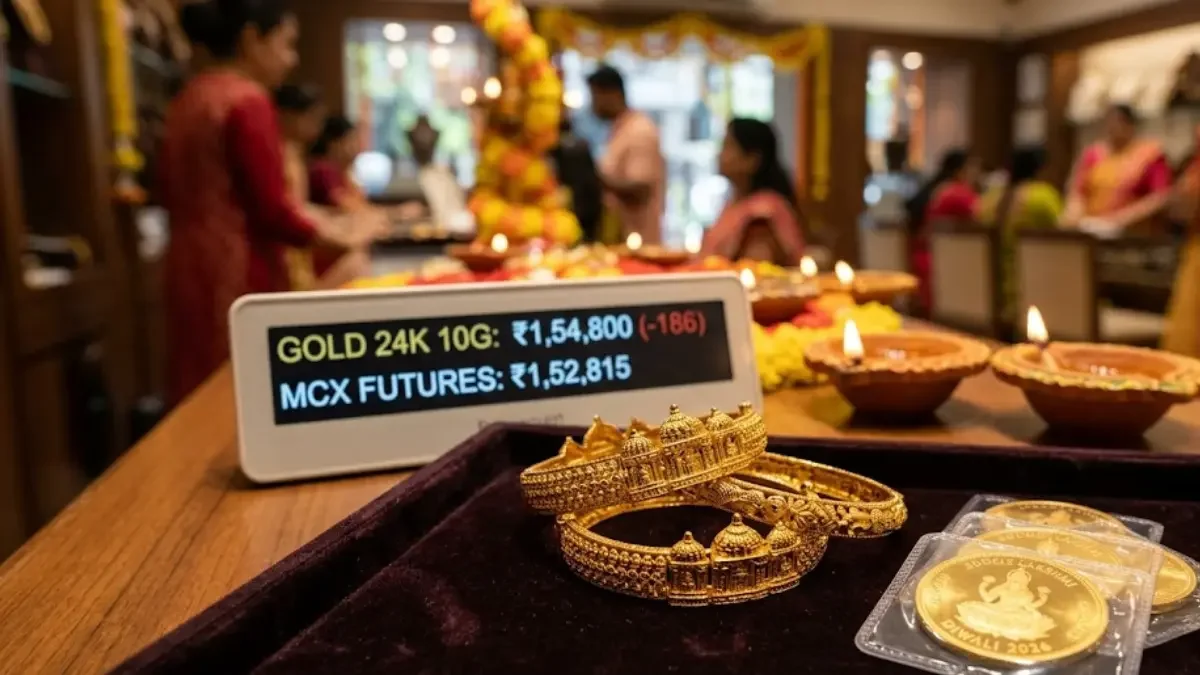
With the major festive season around the corner, millions of Indian households are preparing for traditional purchases ahead of Dhanteras and Diwali. A recent dip in domestic gold benchmark prices has sparked intense discussion among families and investors asking a crucial question: is this price pullback the ideal window to buy gold, or will rates drop further?
On September 5, 2026, benchmark 24-karat gold rates slipped by ₹186 per gram to reach ₹15,480 per gram (₹1,54,800 per 10 grams), marking one of the sharpest single-session retreats in recent weeks. MCX gold futures also unraveled to ₹1,52,815 per 10 grams as global macroeconomic pressures triggered market position shifts.
What Caused the Sudden Drop in Gold Prices?
The immediate catalyst behind the pullback was strong US economic data, which reduced expectations of aggressive interest rate cuts by the Federal Reserve. Higher global interest rate expectations tend to strengthen the US dollar and weigh down bullion prices globally.
However, domestic gold prices in India depend on a blend of global spot trends, US dollar conversion rates, import duties, and localized consumer demand. While international markets experienced volatility, local demand in India remains robust due to upcoming cultural festivals and the approaching winter wedding season.
Why Does the Decision Matter for Indian Buyers?
Gold is not merely a decorative ornament in India; it serves as a long-term inflation hedge, an asset class, and an essential part of cultural celebrations. Historical market cycles show that physical demand typically ramps up 4 to 6 weeks before Dhanteras. During peak weeks, jewellers often raise making charges and local delivery premiums due to tight inventory levels.
Buying during temporary market pullbacks allows households to hedge against potential price spikes that historically occur when peak festive shopping hits the market between October and November.
Should You Buy Now or Wait?
Market analysts suggest that timing the absolute bottom of gold prices is notoriously difficult. Instead of attempting a single large purchase at the last minute, experts recommend two strategic approaches:
Staggered Buying (Rupee-Cost Averaging): Purchasing gold in smaller quantities during minor dips reduces the impact of short-term volatility.
Rate-Locking Instruments: Many established jewellers offer rate-lock facilities, allowing consumers to book current gold rates by paying a deposit, protecting them if prices rise before Diwali.
While short-term macroeconomic volatility may continue over the next few weeks, structural demand from central banks and seasonal Indian consumption generally supports long-term bullion value.
Frequently Asked Questions (FAQ)
Q1: Why do gold prices usually rise during the festive season in India?
A1: High consumer demand during festivals like Dhanteras and Diwali, combined with the wedding season, increases physical purchasing, which historically firms up local rates and jeweller premiums.
Q2: Is 24K gold better for investment than 22K gold?
A2: Yes. 24K gold represents 99.9% pure gold, making it ideal for coins, bars, and financial investments. 22K gold contains 91.6% purity mixed with other metals, making it stronger and more suitable for daily-wear jewelry.
Q3: What additional charges apply when buying physical gold in India?
A3: On top of the base market rate, gold purchases incur a 3% Goods and Services Tax (GST) alongside jeweller-specific making charges and applicable local taxes.
Q4: Should I consider digital gold or Gold ETFs instead of physical jewelry?
A4: If your goal is purely financial investment without making charges or storage hassles, Digital Gold, Sovereign Gold Bonds (SGBs), or Gold ETFs offer higher liquidity and transparency compared to physical jewelry.
also read : Why Gold Prices Are Dropping Rapidly: Major Factors Explained