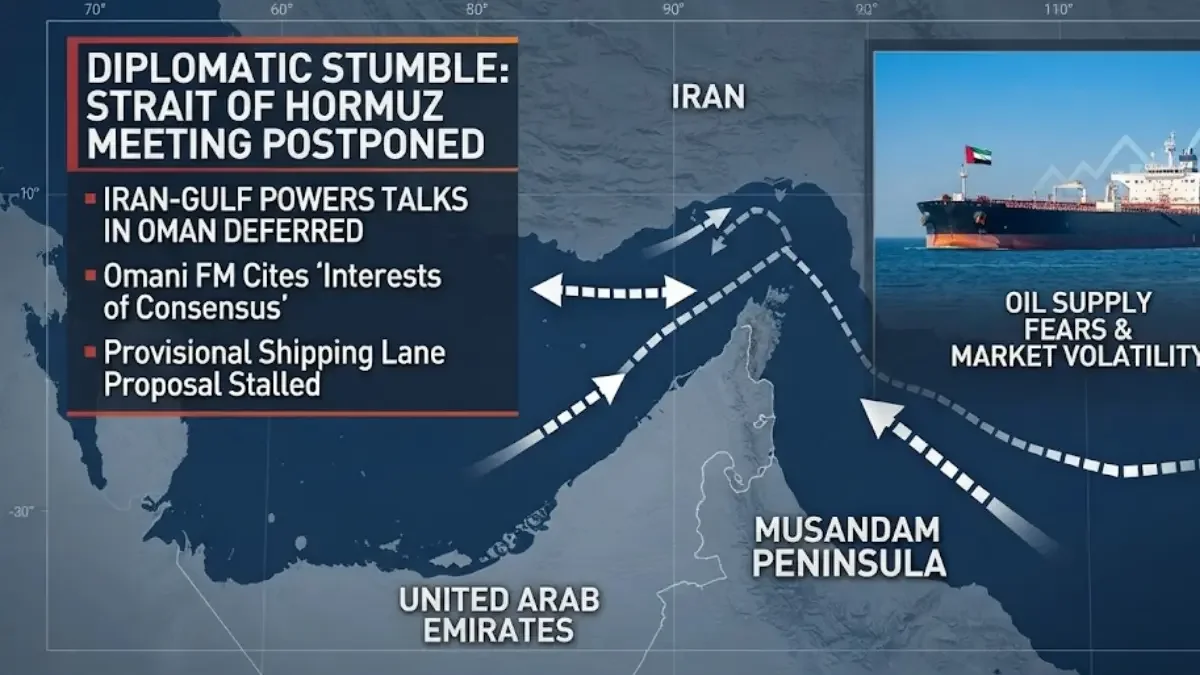
Middle East diplomacy faced a significant roadblock following the abrupt postponement of a crucial meeting between Iran and neighboring Persian Gulf powers. The talks, which were scheduled to take place in Oman, aimed to discuss an interim proposal for managing commercial vessel traffic through the strategic Strait of Hormuz. However, Omani Foreign Minister Badr Albusaidi announced that the gathering had been deferred “in the interests of consensus” following a request from several regional nations.
The sudden delay dashed immediate hopes for a regional de-escalation framework. The proposed arrangement, brokered largely through Omani mediation, sought to establish temporary shipping lanes where inbound traffic would pass through Iranian waters and outbound traffic would move partially near Oman. The collapse of this diplomatic window highlights the fragile security architecture governing one of the world's most critical energy chokepoints.
Rising Tensions and Energy Supply Pressures
The diplomatic stumble occurred against a backdrop of escalating military friction and infrastructure vulnerabilities across the region. Markets reacted swiftly to the uncertainty, with international oil benchmarks surging as trading opened. Compounding the crisis, a key east-west pipeline in Saudi Arabia remained shut following recent drone strikes, severely restricting alternative export pathways that bypass the Strait of Hormuz.
Adding to the maritime perils, security monitors reported a fresh projectile strike on a vessel transiting the strait, resulting in a severe onboard fire and crew evacuations. Meanwhile, Iranian media reported that an Iranian commercial vessel was struck off Qeshm Island, causing casualties and amplifying mutual distrust. These converging security incidents underscore the immense dangers facing commercial mariners and energy carriers in the Persian Gulf.
Broader Economic Impact and Future Outlook
For ordinary consumers and emerging economies heavily reliant on imported energy, the prolonged disruption of Middle East transit routes spells persistent economic headwinds. With nearly a fifth of global petroleum historically flowing through the Strait of Hormuz, any sustained blockage or diplomatic stalemate threatens to drive up fuel costs, stoke inflation, and complicate supply chains worldwide.
Looking ahead, regional stakeholders face immense pressure to revive diplomatic dialogue. While Tehran maintains that broader grievances—including international sanctions and port blockades—must be addressed before maritime restrictions are permanently lifted, Gulf nations continue to seek collective mechanisms to insulate regional economies from conflict. Unless a workable consensus is reached between regional capitals and global powers, energy markets will remain vulnerable to further volatility.
Frequently Asked Questions (FAQ):
Why was the Strait of Hormuz meeting postponed? The meeting was postponed at the request of several regional countries, with Omani Foreign Minister Badr Albusaidi stating the decision was made "in the interests of consensus" to ensure broader regional agreement.
What was the main purpose of the proposed Strait of Hormuz agreement? The proposal aimed to establish a temporary, managed shipping lane system allowing commercial vessels to navigate the strait safely under the joint oversight of Oman and Iran.
How are these disruptions affecting global oil prices? Uncertainty surrounding the safety of the strait, combined with the temporary closure of key alternative pipelines in Saudi Arabia, has led to sharp increases in international crude oil prices.
Will the diplomatic talks be rescheduled? Iranian and Omani officials have indicated that they will coordinate to determine a suitable future date for the consultations once regional consensus can be better established.