A New Chapter Begins in Damascus
Syria is moving through a pivotal transition following the end of decades of rule under Bashar al-Assad. Under the leadership of President Ahmad al-Sharaa, the country is balancing major economic initiatives, administrative integration, and legal accountability processes.
Recent weeks have marked milestone developments, including major diplomatic moves, court verdicts against former regime leaders, and steps toward economic recovery.
Economic Revival and Sanctions Relief
A primary driver of the nation’s post-Assad direction is economic rehabilitation. The US Department of State officially removed Syria from its State Sponsors of Terrorism list, clearing the path for broader international trade and relief from long-standing economic restrictions.
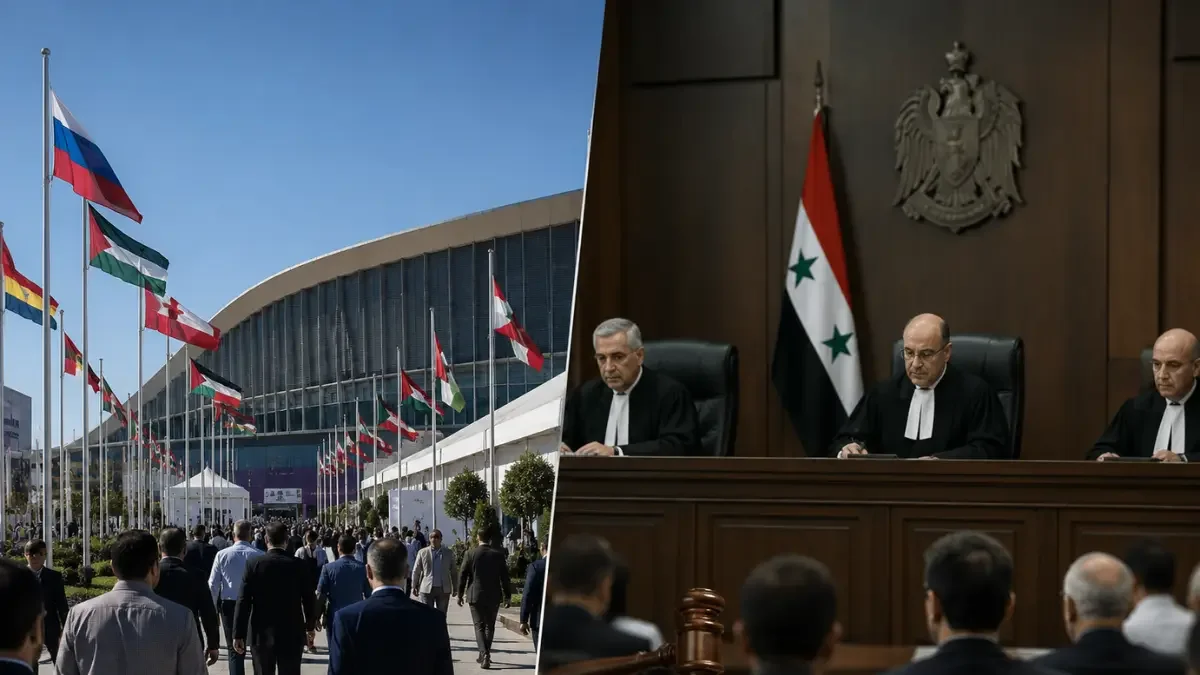
Addressing the nation at the opening of the 63rd Damascus International Fair—held under the banner "Syria Rises Again"—President Ahmad al-Sharaa outlined plans to position Syria as an economic hub connecting East and West:
International Participation: Nearly 1,000 entities representing roughly 60 countries participated in the fair, signaling renewed foreign interest.
Growth Estimates: International Monetary Fund (IMF) observers project accelerating double-digit economic growth, though widespread poverty remains a key challenge.
Infrastructure Recovery: Priority sectors include energy restoration, trade corridors, and rebuilding damaged urban centers.
Judicial Accountability and Transitional Justice
Alongside economic reforms, Syria’s judicial system has taken formal steps to address past human rights violations. A court in Damascus sentenced former President Bashar al-Assad and senior officials to death in absentia for crimes against humanity and war crimes committed during the civil war.
Simultaneously, in-person trials were conducted for captured figures, including former security official Atef Najib. The court proceedings have drawn international attention, with United Nations representatives calling for transparent legal standards, formal appeal processes, and careful measures to distinguish systemic leadership from lower-level administrative compliance.
Security Integration and Regional Identity
Reestablishing centralized governance across Syria's diverse regions remains an active focus:
Integration of Armed Groups: The Syrian Democratic Forces (SDF) completed civil and military integration with official state institutions, following agreements that brought key northern and eastern areas back under central government administration.
Kurdish Rights Recognition: Official decrees recognized Syrian Kurds as an essential part of the national identity, designating Kurdish as a national language and Nowruz as an official holiday.
Local Security Challenges: Authorities continue law-enforcement operations in southern provinces like Dar'a and Quneitra to secure trade routes and prevent localized violence.