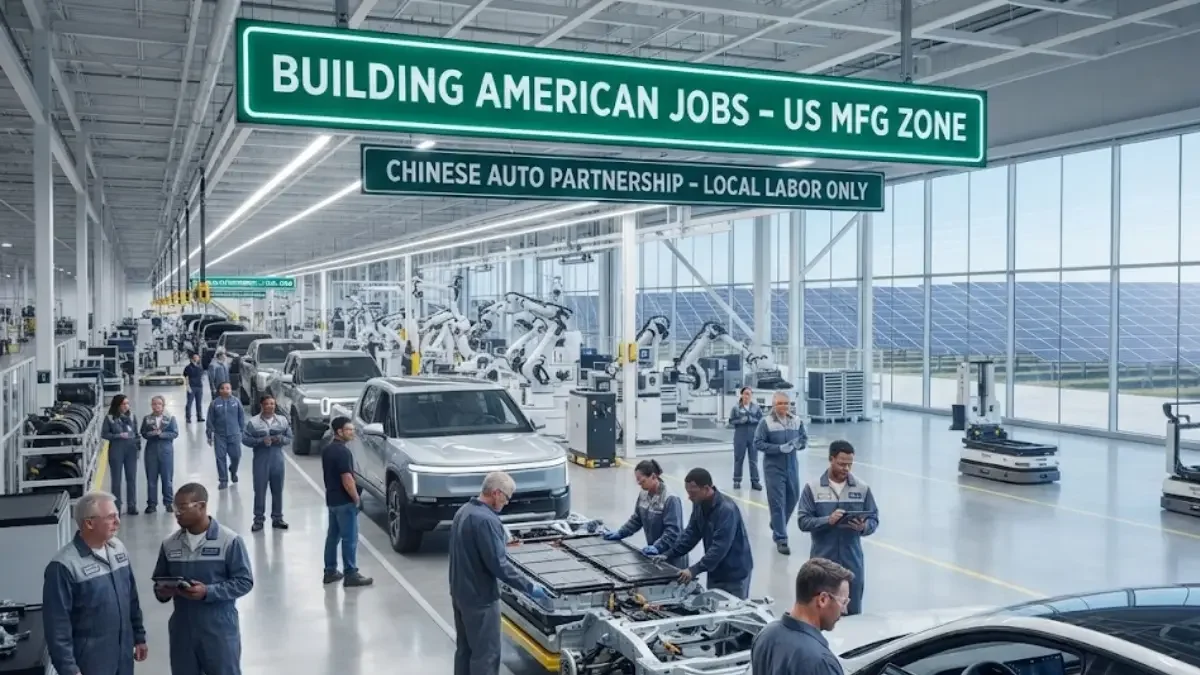
President Donald Trump recently opened the door to a potential shift in American trade policy by stating that he would be open to Chinese automakers manufacturing vehicles on American soil, provided they employ local labor. Speaking during an interview on Fox News’s The Ingraham Angle, Trump addressed the future of foreign automotive investments and the strict boundaries surrounding domestic market access.
"If China wanted to come in and open a plant to build their cars here, I'd be okay with that," Trump stated during the program. Clarifying his position, he drew a parallel to how foreign brands historically integrated into the North American economy: "Japan does it, but they hire our people. The big thing is they hire our people. They use our people."
Background and Context of the Statement
The remarks arrive at a sensitive geopolitical and economic juncture, coinciding with preparations for high-level diplomatic engagements and growing anxiety within the domestic manufacturing sector. Over recent years, Washington has maintained stiff protectionist policies, including heavy tariffs exceeding 100 percent on electric vehicles and specialized components originating from China, aimed at safeguarding local manufacturing ecosystems.
Lawmakers and industrial groups have pushed back sharply against the prospect of direct imports. Earlier, concerns spread across Capitol Hill regarding potential pathways for Chinese brands to enter the American consumer market. Addressing these rumors, Trump firmly drew a line between localized production and cross-border importing, emphasizing that he remains opposed to Chinese companies building vehicles in third-party nations like Mexico for direct export into the United States.
Industry Reactions and Economic Implications
Major American and international automotive stakeholders have expressed deep apprehension regarding the rapid global expansion of heavily subsidized foreign competitors. Organizations representing traditional giants such as General Motors, Ford, and international brands with established domestic footprints have lobbied for permanent legislative barriers against connected Chinese vehicles, citing potential data security risks and market disruption.
However, Trump’s condition—mandating that factories must be set up locally with American payrolls—mirrors the playbook used by Japanese and European carmakers over the past several decades. By building assembly plants locally, foreign entities invest directly in state economies, source domestic parts, and create thousands of blue-collar jobs. Despite this theoretical openness, analysts note that regulatory hurdles, national security reviews, and stringent compliance frameworks mean any actual factory development would face intense political scrutiny.
What Lies Ahead
As bilateral trade talks and high-profile international summits approach, the dialogue surrounding green energy transitions, supply chain security, and vehicle technology will remain central. While the prospect of Chinese automotive brands establishing domestic footprints offers potential capital investment, it also triggers fierce debates among policymakers aiming to protect national industrial independence. Whether foreign firms will commit to building compliant domestic infrastructure under strict local labor terms remains to be seen as economic and regulatory policies continue to evolve.