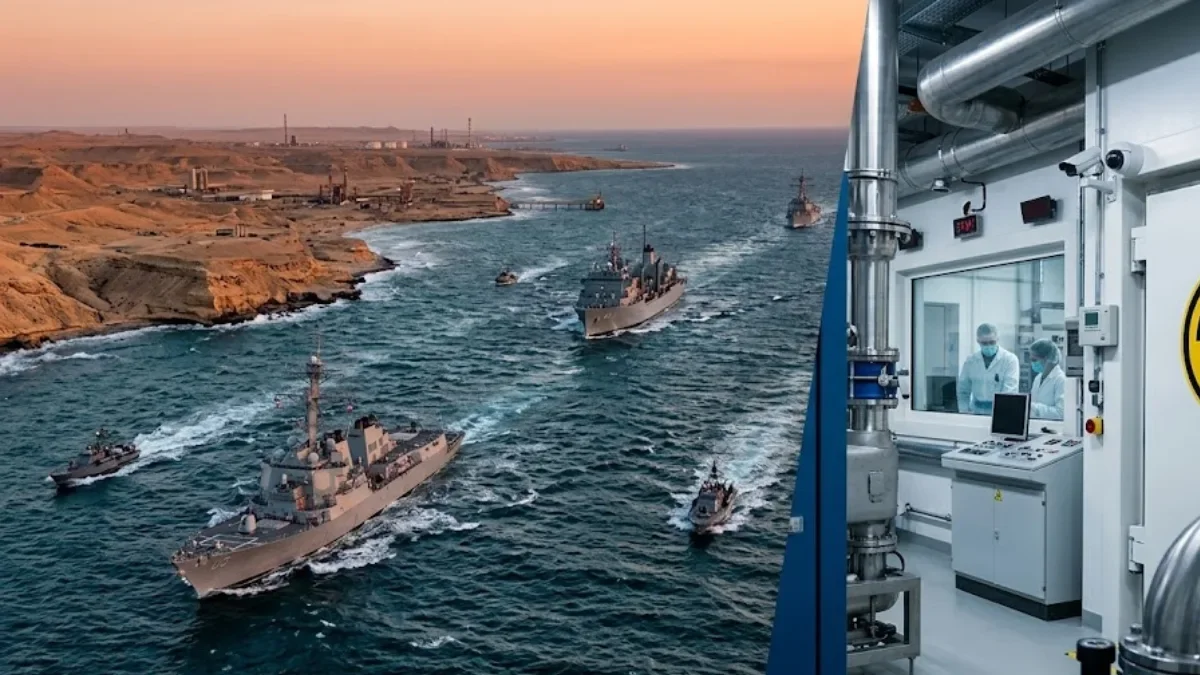
Military exchanges between the United States and Iran have intensified across West Asia, with U.S. strikes targeting Iranian position sites near the Strait of Hormuz and Iranian counter-strikes aimed at American military installations in the region.
Washington argues that its military actions are vital to dismantle threats to international shipping routes and neutralize advanced Iranian weapon deployments. However, critics and observers ask why the dispute cannot easily be resolved through diplomacy. The primary friction point lies in deep-seated geopolitical distrust, security commitments to regional allies, and Tehran’s persistent control over the Strait of Hormuz—a maritime choke point responsible for carrying a major fraction of global oil supplies.
┌─────────────────────────────────────────────────────────┐
│ CORE DRIVERS OF THE CONFLICT │
├───────────────────────────┬─────────────────────────────┤
│ United States Strategic │ • Regional base protection │
│ Priorities │ • Maritime route security │
│ │ • Nuclear non-proliferation │
├───────────────────────────┼─────────────────────────────┤
│ Iran Strategic │ • Deterrence against strikes│
│ Priorities │ • Strait of Hormuz leverage │
│ │ • Sovereignty preservation │
└───────────────────────────┴─────────────────────────────┘
Is Iran Actually Trying to Build a Nuclear Weapon?
The question of whether Tehran is actively building an atomic bomb remains central to global concern. Iranian officials maintain that their nuclear ambitions are strictly peaceful and intended for energy and medical research.
However, reports from the International Atomic Energy Agency (IAEA) present a complicated picture. While the IAEA has not confirmed an explicit decision by Iran to manufacture a warhead, it reports that Iran had accumulated hundreds of kilograms of highly enriched uranium refined up to 60% purity—a level far beyond civilian energy needs and technically close to weapons-grade (90%). Following series of military strikes on key nuclear research facilities at Natanz and Isfahan, IAEA inspectors have faced severely restricted access, leaving the exact status and location of highly enriched stockpiles unverified.
What This Means for India and the Global Economy
For ordinary citizens and international markets, the continuation of this confrontation carries tangible risks:
Energy Costs: Any prolonged disruption to shipping in the Strait of Hormuz spikes global crude oil prices, impacting fuel costs and driving consumer inflation worldwide.
Regional Stability: Tens of thousands of expatriate workers reside in neighboring Gulf nations, making regional stability a matter of direct security and economic concern.
Geopolitical Realignment: Persistent instability alters diplomatic alliances, diverting trade routes and increasing global defense spending.
With diplomatic channels constrained and military hardware deployed across key strategic transit points, short-term resolution remains elusive as both nations prioritize strategic leverage over immediate compromise.
also read : Nepal Himalayan Flood Crisis: PM Shah Demands Global Climate Action as Disaster Toll Mounts