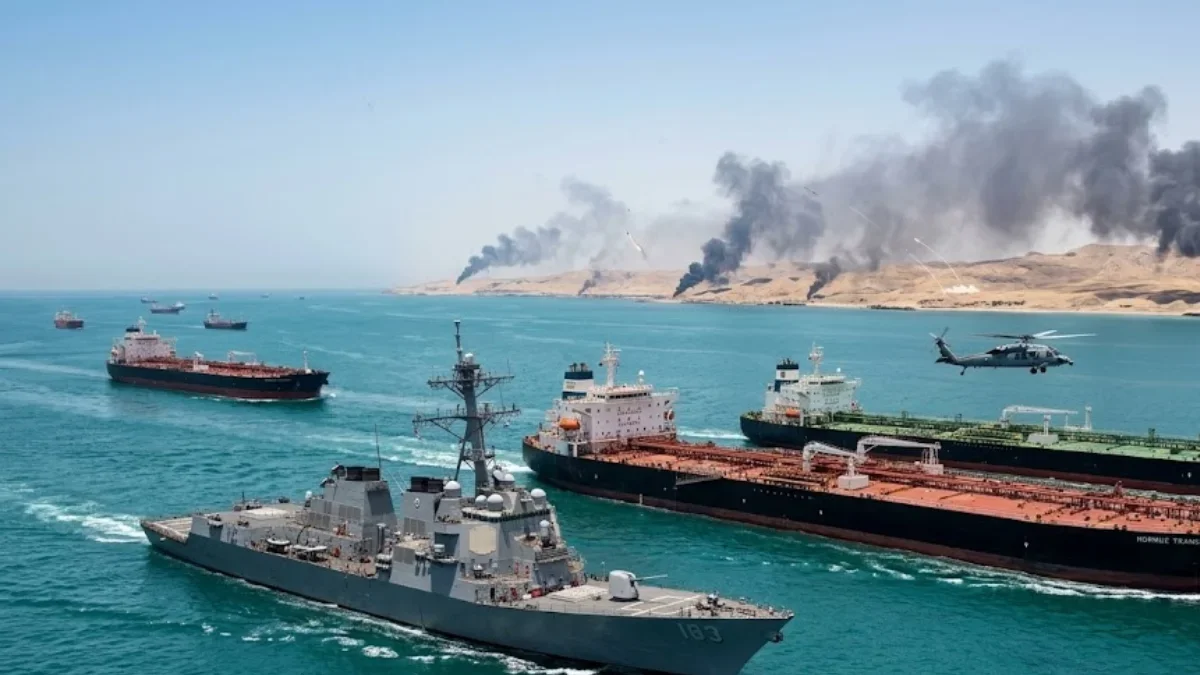
In one of the most intense single-day operations since regional hostilities erupted six months ago, the United States military carried out precise airstrikes against nearly 60 Iranian military targets while simultaneously escorting a record 40 commercial vessels through the Strait of Hormuz. The high-stakes operation successfully safeguarded roughly 18 million barrels of crude oil traveling through the strategic maritime choke point, marking a wartime peak for US naval escort efforts.
What Happened in the Strait of Hormuz?
According to defense officials, US forces deployed a coordinated combination of air, sea, and space assets to secure the waterway. While guarding the civilian tankers from waves of incoming attack drones and anti-ship cruise missiles, American air and naval forces struck key Iranian infrastructure surrounding the strait.
The military strikes targeted Iranian air defense sites, radar installations, naval communications hubs, and specialized mine-laying platforms. Under a newly authorized "tanker for tanker" deterrence policy, US strikes also hit engine rooms of Iranian military-managed tankers anchored off the coast.
Why Does This Waterway Matter for Global Energy?
The Strait of Hormuz is the world’s most critical oil transit route, connecting Middle Eastern crude producers to key international markets. Historically, around 20 million barrels of oil—nearly a fifth of global daily consumption—pass through the narrow passage every day.
Since hostilities intensified earlier this year, Iran has threatened to block shipping, causing commercial vessel traffic to drop sharply. Any sustained disruption immediately threatens global fuel supplies, leading to sharp price spikes in gasoline, diesel, and essential goods worldwide.
What Is the Expected Impact Going Forward?
For import-dependent nations like India, maintaining open shipping lanes in the Gulf is vital for keeping domestic energy prices stable and avoiding supply bottlenecks. US officials stated that degraded Iranian radar and missile infrastructure has significantly lowered threat levels for commercial shipping for the coming weeks.
However, energy market analysts warn that security risks remain elevated. Despite heavily defended naval convoys, shipping companies remain cautious about potential retaliation or sea-mine hazards. As Washington focuses its strategic priorities on protecting oil routes and enforcing naval blockades, international diplomatic efforts led by regional mediators continue in an effort to prevent further escalation across the Gulf.