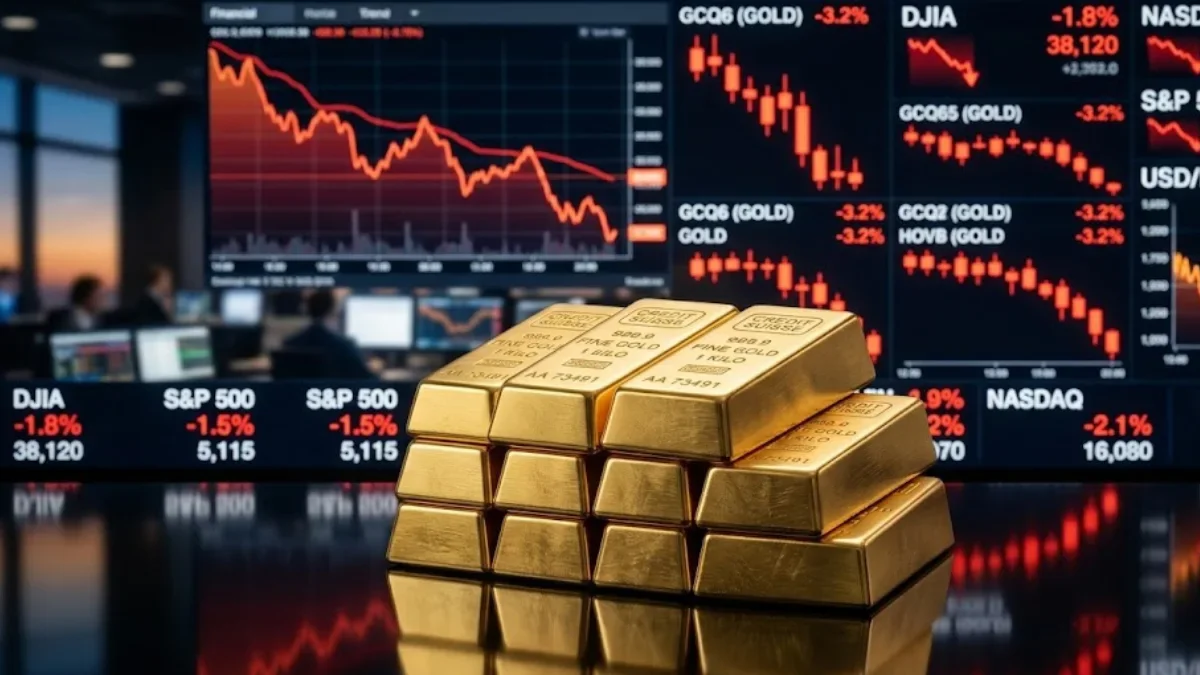
Gold prices have experienced a notable pull-back across international benchmarks and domestic Indian markets. Spot gold on global exchanges recently dipped over 20% from its record peak hit earlier this year, while domestic bullion rates on the Multi Commodity Exchange (MCX) adjusted accordingly.
Key Drivers Behind the Decline
The primary catalyst for the decline stems from monetary policy signals from the US Federal Reserve. Indications that interest rates will remain elevated for longer to manage persistent inflation have altered investor behavior. Because gold is a non-yielding asset that generates no regular interest or dividends, higher interest rates increase the opportunity cost of holding physical bullion compared to government bonds or interest-bearing instruments.
Additionally, the strength of the US Dollar has played a central role. Since global gold prices are denominated in US Dollars, a stronger greenback makes the metal relatively more expensive for international buyers holding other currencies, softening global physical and institutional demand. Rising yields on 10-year US Treasury notes have further diverted institutional capital into sovereign debt instruments.
What This Means for Domestic Buyers in India
In India, domestic retail gold rates depend heavily on international bullion benchmarks, import tariffs, and the USD-INR exchange rate. While the price pull-back offers respite to prospective retail buyers and families preparing for the upcoming wedding season, local rates remain sensitive to currency fluctuations. Profit-taking by large institutional investors following months of historic highs has accelerated momentum in the short term.
What to Expect Next
Market analysts indicate that gold's trajectory over the coming months will hinge on upcoming US economic indicators, including inflation reports and labor market data. While central bank purchases and geopolitical uncertainties continue to provide underlying structural support, near-term movements will remain tied to central bank policy decisions and currency movements. Investors and consumers are advised to track institutional indicators rather than short-term daily swings.
Frequently Asked Questions (FAQ)
1. Why is the gold price falling despite global market uncertainty?
While gold is traditionally seen as a safe haven, high interest rates and rising government bond yields make non-interest-paying assets like gold less attractive to institutional investors compared to yield-bearing bonds.
2. How does the US Dollar affect domestic gold prices in India?
International gold is traded in US Dollars. When the dollar strengthens, buying gold becomes more expensive for non-US currency holders, which suppresses overall global demand and lowers baseline import costs.